

 中文简体
Multiple Modes LED Curtain Lights for Window and Wall Decoration
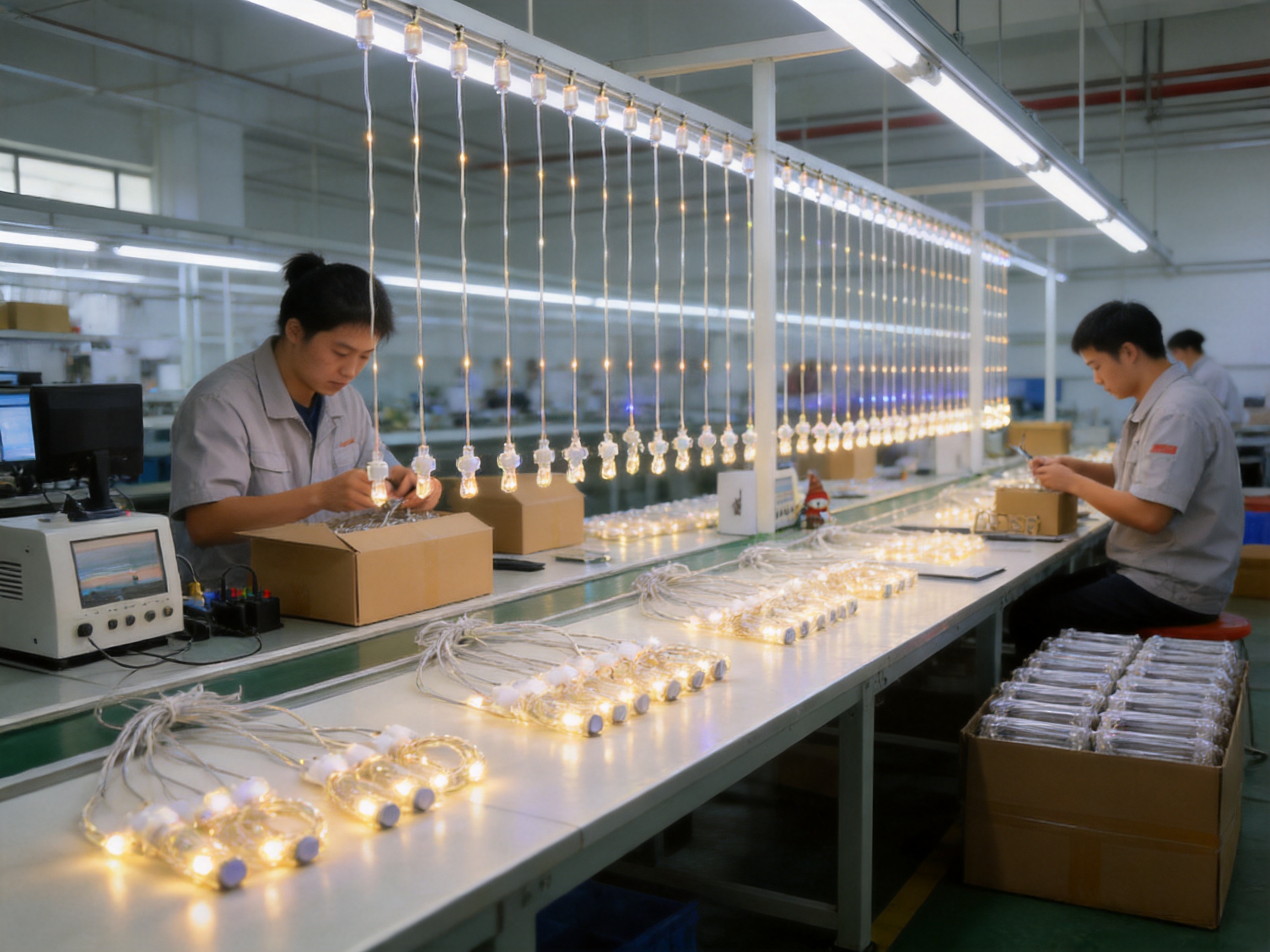
LED curtain lights have become one of the most adaptable forms of decorative lighting for homes, offices, retail spaces, hospitality venues, celebrations, and event installations. Unlike a conventional string of lights that follows a single line, a curtain light creates a layered arrangement of vertical light strands. This structure allows it to cover a larger visual area while using a relatively simple installation system. The result is a luminous background that can be warm, cheerful, elegant, festive, or dreamlike depending on the selected lighting mode and the surrounding space.
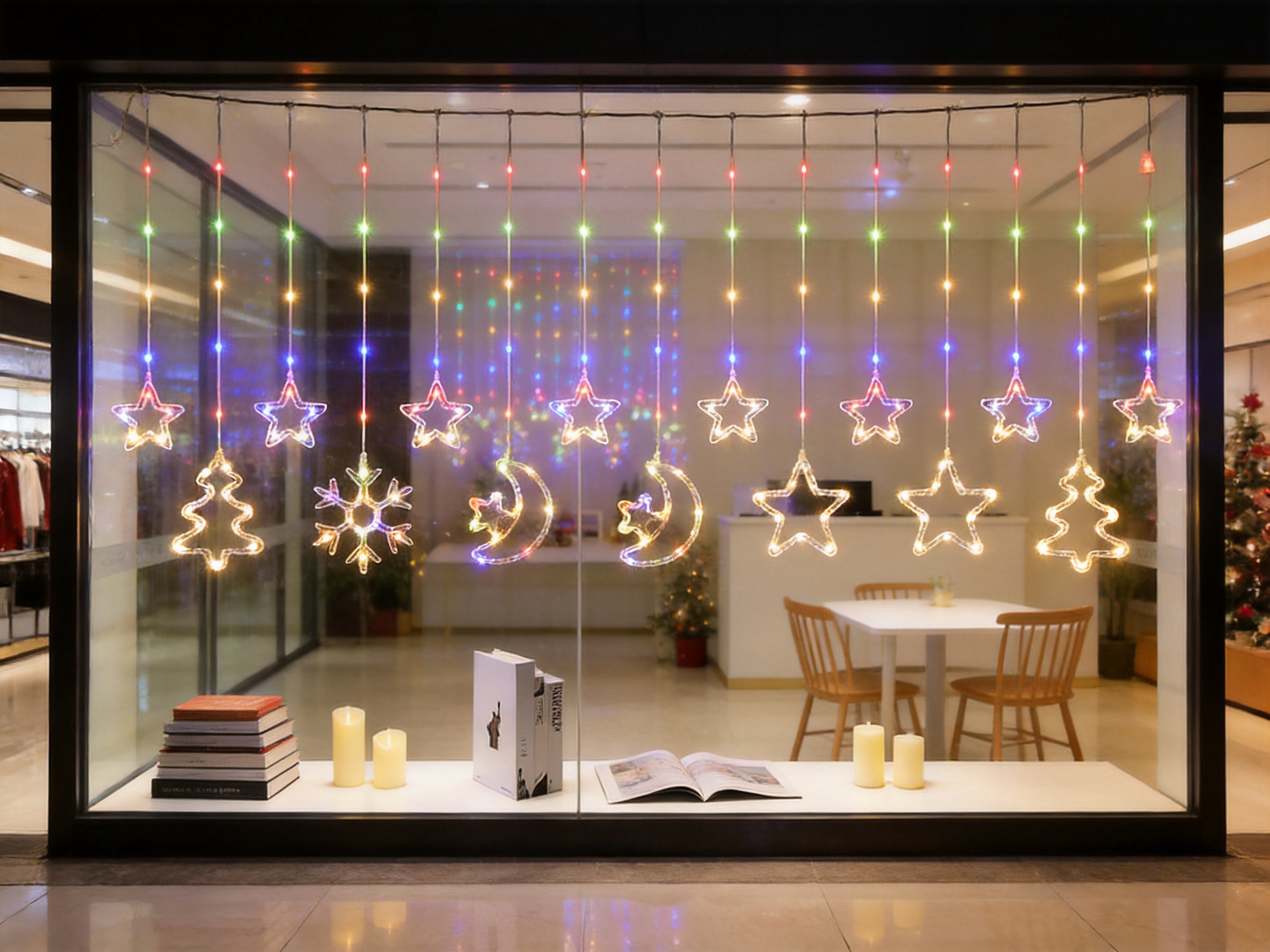
The Multiple Modes LED Curtain Lights for Window and Wall Decoration are designed to meet this need with a flexible, customizable, and energy-efficient lighting solution. Intended for windows and walls, the product can also be used as a decorative backdrop, shop-window feature, party display, stage element, or ambient light installation. Its multiple lighting modes include constant light, flashing, and spotlight effects, allowing users to adjust the appearance of the display according to the occasion.
The product belongs to the LED Curtain Lights category and is manufactured by Taizhou Mingde Decorative Lighting Co., Ltd., a Chinese decorative lighting producer with decades of experience in festive lighting. The company’s capabilities include large-scale production, integrated component manufacturing, strict quality control, export experience, and a broad product portfolio covering linear lights, icicle lights, net lights, circular lights, spiral trees, LED string lights, copper wire lights, and cord lights.
For buyers comparing decorative lighting products, the key value of this curtain light lies in the combination of visual coverage, flexible installation, selectable effects, low energy consumption, and manufacturing experience. It is not limited to one holiday or one type of venue. Instead, it can be adapted for seasonal decoration, commercial display, everyday interior styling, celebrations, and temporary events.
What Makes LED Curtain Lights Different from Conventional String Lights?
Traditional string lights generally consist of bulbs or LED nodes arranged along one cable. They are useful for outlining windows, wrapping trees, decorating railings, and adding accent points to furniture or architectural features. However, their linear structure may leave large areas of a wall or window visually empty unless several strings are installed in parallel.
Curtain lights solve this limitation by using a main horizontal wire with multiple hanging strands. These strands extend downward to form a curtain-like arrangement. When installed across a window or wall, the lights create depth and vertical movement that is difficult to achieve with a single linear string. The light can fill a broad surface, making it suitable for backgrounds, displays, photo areas, and architectural decoration.
The vertical arrangement also gives users more creative control. A curtain light may be hung behind a sheer curtain to create a soft glowing texture, placed against a plain wall as a decorative focal point, or installed behind a stage to provide a luminous background. In a shop window, the vertical strands can frame products without taking attention away from the merchandise. In a home, they can transform an ordinary wall into a warm seasonal feature.
Another distinction is the way the lighting pattern is perceived. A regular string often emphasizes the outline of an object. A curtain light emphasizes the surface and atmosphere of a space. This makes it especially valuable when the goal is not merely to illuminate a border, but to create a complete visual environment.
Core Product Advantages
Customizable Length for Different Spaces
One of the most important advantages of this LED curtain light is that its length can be customized. Windows, walls, display counters, stages, and event structures rarely share the same dimensions. A fixed-size product may be too short to provide sufficient coverage or too long to install neatly. Customization allows the lighting arrangement to be matched more closely to the intended application.
For residential users, customization can help the product fit a bedroom window, living-room wall, balcony opening, or decorative alcove. For commercial users, it can support more precise planning for shop windows, hotel interiors, restaurants, exhibition booths, wedding backdrops, and event stages. A properly proportioned light curtain looks more intentional and reduces the need to conceal unused sections.
Custom sizing can also simplify installation. When the product is planned according to the available area, installers may spend less time rearranging strands, hiding excess wire, or combining several incompatible sets. The final display can therefore appear cleaner and more integrated with the surrounding architecture.
Multiple Lighting Modes
The product offers several lighting modes, including constant light, flashing, and spotlight effects. Each mode produces a different atmosphere and can be selected according to the use case.
Constant light provides a stable and calm appearance. It is suitable for home decoration, hospitality settings, retail displays, reception areas, and background lighting where a steady visual effect is preferred. A continuous glow can also be helpful when the light curtain is being used to highlight a wall texture, window treatment, product display, or photographic area.
Flashing modes introduce motion and energy. They are well suited to holidays, parties, celebrations, entertainment venues, and promotional displays. A changing pattern can make the installation more noticeable from a distance and can contribute to a lively festive atmosphere.
The spotlight effect offers another visual variation. By creating stronger points of emphasis within the overall light curtain, this mode can help add rhythm and dimensionality to the display. It may be used for seasonal decoration, stage backgrounds, entrance areas, or any setting where a more dynamic visual impression is desired.
The ability to switch between modes is an advantage over single-function decorative lights. Users do not need one product for quiet everyday illumination and another for special events. A single curtain light can be adjusted as the room, season, or occasion changes.
Low Energy Consumption
LED technology is recognized for producing decorative illumination with relatively low power consumption. For installations containing many light points, energy efficiency is especially important because the lights may operate for extended periods during holidays, events, commercial opening hours, or evening gatherings.
The low-power character of LED lighting can help users manage operating costs while maintaining a bright and attractive display. This is particularly useful for businesses that decorate multiple windows or large areas. It is also beneficial for households that want to enjoy seasonal lighting without using the same level of electricity associated with older lighting technologies.
Energy efficiency does not only relate to cost. It can also support more practical product design. A low-consumption light source is easier to integrate into a wide range of decorative applications, especially where the power supply is limited or where many decorative products are operating simultaneously.
Long Service Life
The LED light source is designed for a long service life, which helps reduce the frequency of replacement. For seasonal displays, long-lasting light sources can support repeated use over several years when the product is installed, stored, and handled appropriately. For commercial applications, durability can reduce interruptions caused by frequent lighting replacement.
Long service life is particularly valuable when the curtain light is installed in a high window, behind a display, or across a large wall where access may be inconvenient. Fewer replacements can reduce maintenance labor and help preserve a consistent appearance throughout a decorative program.
As with any electrical decorative product, service life depends on operating conditions, storage, installation quality, and protection from unsuitable environments. Buyers should confirm the applicable product specifications, power requirements, and intended installation conditions before placing an order.
Low-Temperature Touch and Reliable Decorative Use
The product uses an LED light source characterized by low-temperature operation compared with many traditional decorative lamps. This makes the light curtain more comfortable to use around fabrics, curtains, display materials, and interior decorative surfaces, provided that the product is installed according to the appropriate safety requirements.
Low-temperature operation is also helpful in locations where people may pass close to the light installation. Windows, walls, event backdrops, and retail displays are often placed in accessible areas. A light source that produces less heat can offer a more comfortable and practical decorative experience during extended operation.
Low temperature does not eliminate the need for responsible use. The power supply, cables, connectors, and installation environment must still be selected and managed correctly. Users should avoid damaging the insulation, overloading the power system, or placing the product in conditions beyond its intended design.
Flexible Main Wire and Simple Installation
The flexible main wire can be fixed or bent to suit the installation surface. This is important because windows and walls may include corners, frames, shelves, curtains, furniture, or other obstacles. A rigid lighting structure would be difficult to adapt, while a flexible wire can follow the layout more naturally.
The light curtain can be hung on window frames, mounted across walls, or suspended as a background feature. It may be used in a straight arrangement or incorporated into a broader decorative composition. The wire’s flexibility supports temporary event installation as well as more permanent seasonal displays.
Installation planning should begin with a measurement of the area. Users should consider the width of the window or wall, the desired drop length of the hanging strands, the position of the power source, and the method of securing the main wire. The installation should be stable, neat, and free from sharp bends that could put unnecessary stress on cables or connections.

Multiple Modes LED Curtain Lights for Window and Wall Decoration
Applications Across Residential and Commercial Environments
Home Window Decoration
Windows are among the most natural locations for curtain lights. When installed behind or alongside curtains, the vertical light strands create a layered glow that can be seen from inside and, depending on the setting, from outside. The display can make a living room feel more welcoming, add atmosphere to a bedroom, or support seasonal decoration in a dining area.
A constant-light mode may be appropriate for quiet evening use, while a flashing mode can be selected for holiday gatherings. Because the product can be customized in length, it may be planned for small apartment windows, wide living-room windows, or larger residential openings.
Wall and Background Decoration
A plain wall can become a decorative focal point with the addition of an LED curtain light. The installation may be used behind a sofa, bed, reception desk, display table, or dining area. It can provide a soft background without requiring extensive construction or permanent remodeling.
For photography and video, a curtain light can create a luminous background that adds depth to the frame. For celebrations, it can serve as a party wall, wedding backdrop, birthday feature, or holiday photo area. The multiple modes allow the visual effect to be adjusted from subtle and steady to bright and dynamic.
Retail Windows and Commercial Displays
Retailers often need decoration that attracts attention without overwhelming the products on display. LED curtain lights can frame merchandise, emphasize seasonal themes, and help a storefront remain visually interesting after daylight has faded.
The vertical strands can be installed behind products or along the rear of a display window. A constant glow may support premium product presentation, while a more dynamic setting can be used for promotional periods or festive campaigns. Customization is especially useful for retailers with nonstandard window dimensions or multiple branches with different display layouts.
Office and Hospitality Interiors
Offices, cafés, restaurants, hotels, and reception areas can use curtain lights to create a warmer and more approachable environment. In a hospitality setting, the product may be used near entrances, event rooms, dining areas, lounges, or holiday displays. In offices, it can add seasonal character to reception spaces and employee gathering areas.
The decorative nature of the product allows it to contribute to the overall atmosphere without functioning as the primary source of task lighting. It can be combined with ceiling fixtures, wall lamps, pendant lights, and other decorative products to create a layered lighting plan.
Events and Stage Decoration
Event planners require lighting that can be installed efficiently, adjusted for different moods, and removed or relocated after the event. A flexible LED curtain light is suitable for weddings, festivals, exhibitions, concerts, corporate functions, trade shows, and private parties.
As a stage background, it can help establish depth and movement. As an entrance feature, it can create a welcoming visual threshold. At a wedding or banquet, it can contribute to a romantic or festive backdrop. At an exhibition booth, it can help define the brand’s physical space, although the product itself should be coordinated with the broader display design.
Comparison with Common Decorative Lighting Alternatives
Buyers generally compare curtain lights with linear string lights, net lights, rope lights, and other decorative lighting formats. Each has a suitable role, but their structures produce different results.
| Lighting Type | Typical Structure | Visual Effect | Best-Suited Applications | Potential Limitation |
|---|---|---|---|---|
| LED Curtain Light | Main horizontal wire with hanging strands | Layered vertical light curtain with broad surface coverage | Windows, walls, backdrops, stages, shop displays | Requires careful placement of the main wire and hanging strands |
| Linear String Light | Single cable with evenly spaced light points | Outline or flexible line of light | Trees, railings, furniture, borders, small accents | May require multiple strings to cover a large wall |
| Net Light | Connected grid or mesh | Uniform patterned coverage | Shrubs, fences, broad flat surfaces | Less flexible for irregular shapes or individually arranged vertical strands |
| Rope Light | Continuous light enclosed in a tube | Solid line or edge illumination | Contours, shelves, steps, architectural outlines | Less suitable for creating separate hanging light strands |
| Copper Wire Light | Thin wire with closely spaced light points | Delicate, fine, and highly flexible illumination | Craft projects, centerpieces, small decorative objects | May not provide the same broad curtain effect for large windows or walls |
The LED curtain light has a clear advantage when the objective is to cover a vertical area and create a three-dimensional background effect. A linear string may be more appropriate for outlining an object, while a net light may be preferable for covering bushes or fences. The curtain design occupies an important middle ground: it provides broad visual coverage while retaining a flexible and lightweight structure.
The product also has an advantage over single-mode decorative lighting because its lighting effects can be changed. Buyers can select a stable appearance for daily use and a more active pattern for celebrations without replacing the installation.
Manufacturing Strengths and Production Experience
Longstanding Industry Background
Taizhou Mingde Decorative Lighting Co., Ltd. traces its history to 1968 and was formerly part of Zhejiang Festival Lighting General Factory. This long presence in the festive lighting industry provides an important foundation for product development, production organization, quality management, and export service.
Decorative lighting requires more than assembling light-emitting components. Manufacturers must coordinate wires, connectors, control systems, housings, packaging, electrical performance, visual consistency, and installation requirements. Decades of industry involvement can support a more mature understanding of these interconnected processes.
The company’s experience also spans a broad range of festive lighting formats. Its product portfolio includes linear lights, icicle lights, net lights, circular lights, spiral trees, LED string lights, copper wire lights, and cord lights. This variety indicates familiarity with different construction methods and different decorative applications.
High Annual Production Capacity
The company reports an annual production capacity of 10 million strings of festive lights and is described as one of China’s largest export bases for festive lighting. A production scale of this kind can be valuable to wholesale buyers, importers, distributors, retailers, and project contractors that require stable supply for seasonal programs or multiple markets.
Large-scale capacity can support more consistent production scheduling. It may also allow the manufacturer to handle standard products and customized orders within an organized production system. For businesses planning holiday sales, reliable supply is especially important because demand is concentrated around specific seasons and delivery delays can affect an entire retail cycle.
Capacity alone does not determine product quality, but it provides a foundation for serving larger orders. Buyers should still review specifications, samples, inspection procedures, packaging details, and delivery terms for each project.
Integrated Manufacturing Process
The company operates as an integrated and standardized lighting enterprise, with quality control extending from component manufacturing through final assembly and shipment. An integrated process can provide stronger coordination than a fragmented supply chain in which different stages are handled by unrelated suppliers.
At the component stage, manufacturing teams can monitor the materials and parts used in the lighting system. During assembly, production personnel can manage the arrangement of LED nodes, wires, connectors, control components, and supporting structures. At the final inspection stage, finished products can be checked before packaging and shipment.
This process is particularly important for curtain lights because the product contains many connected strands. Consistent spacing, secure connections, reliable insulation, and correct operation of the lighting modes all contribute to the final customer experience. A well-organized manufacturing system can help reduce variation between production batches.
Quality Management and Certification Experience
The company established an ISO 9001 quality system in 1997. A quality management system provides a structured framework for documenting procedures, controlling production activities, reviewing performance, and supporting continuous improvement.
The company was also among the first domestic companies in the industry to obtain U.S. UL certification. Certification requirements vary by product and market, so buyers should confirm the exact certification applicable to the specific model and configuration they intend to purchase. Nevertheless, experience with recognized certification systems demonstrates awareness of the importance of electrical safety, documented standards, and market compliance.
For international buyers, manufacturing experience with certification and export requirements can simplify communication about technical documents, labeling, packaging, testing, and product configuration. These factors are especially important when decorative lights are sold through retailers or installed in public and commercial spaces.
How the Manufacturing Process Supports Product Performance
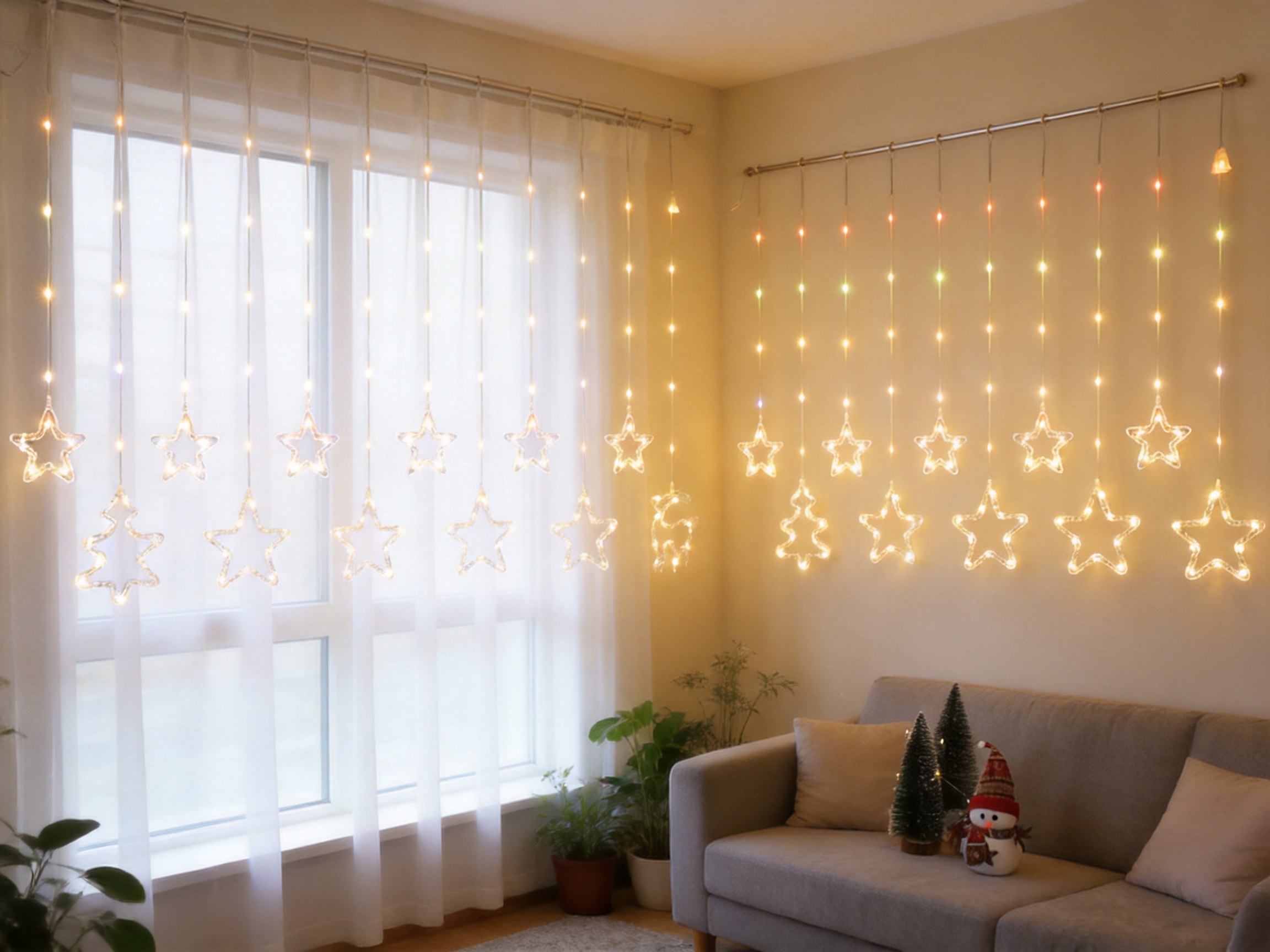
The advantages of an LED curtain light are visible in the final display, but they depend on many less visible production details. The light curtain must be flexible enough to install, yet sufficiently stable for repeated handling. The hanging strands must remain properly connected to the main wire. The light points must operate consistently across the installation. The controller or mode-switching system must respond correctly. Packaging must protect the product during transportation.
Integrated production and quality control can support these requirements by allowing the manufacturer to examine the product as a complete system rather than as a collection of unrelated parts. Each production stage contributes to the product’s reliability.
Component Control
LED performance depends on the quality and consistency of the light-emitting components, electrical parts, wires, and connectors. Component control helps ensure that the selected materials are suitable for the intended decorative application and compatible with the product design.
For curtain lights, component consistency is important because the installation may contain many light points. Differences in brightness, color appearance, or connection quality can become noticeable when the product is spread across a large window or wall.
Assembly Accuracy
Assembly accuracy affects the spacing and visual balance of the curtain. If hanging strands are not positioned consistently, the light curtain may appear uneven. If connections are not secured properly, the product may be more difficult to install or maintain.
A standardized assembly process helps workers follow repeatable procedures. This can be especially important for customized lengths, where production teams must follow specific order requirements while maintaining the same underlying quality standards.
Functional Testing
Functional testing should confirm that the light source operates and that the available modes perform as intended. Testing may include checking constant light operation, flashing effects, spotlight behavior, connections, and general electrical performance.
When products are intended for export, functional testing and documentation can also help align the finished goods with the requirements of the destination market. Buyers may request inspection records or pre-shipment inspection arrangements for larger orders.
Final Assembly and Shipment Control
The final stages of assembly and shipment are important because a product can be manufactured correctly but damaged by poor handling or unsuitable packaging. Curtain lights should be arranged and packed in a way that reduces tangling, crushing, and stress on the wires.
Clear product identification, organized cartons, and suitable protective packaging can help distributors receive and process goods more efficiently. For seasonal lighting, shipment timing is also crucial. A well-managed production schedule can support the buyer’s warehouse planning and retail launch calendar.
Designing an Effective Light Curtain Installation
Measure Before Ordering
Begin by measuring the width and height of the intended installation area. Record the distance from the light curtain to the nearest power source and identify any obstacles such as window handles, curtain rails, shelves, ceiling beams, or furniture.
When ordering a customized product, communicate the desired overall dimensions clearly. It may also be useful to specify whether the light curtain will be installed inside, in a protected commercial display, or in another environment. The manufacturer can then confirm the appropriate configuration and technical details.
Select the Right Lighting Mode
Constant light is usually the most versatile mode for daily use. It creates a stable visual background and works well in spaces where movement may be distracting. Flashing effects are more suitable for festive and entertainment-oriented settings. Spotlight effects can add emphasis and visual rhythm to a decorative composition.
Mode selection should reflect the purpose of the installation. In a restaurant, a gentle constant effect may create a more comfortable dining environment. In a holiday shop window, a dynamic mode may attract attention. At a wedding or stage event, the mode can be selected to complement the program, music, or photography.
Coordinate with Other Decorative Elements
A curtain light should be considered part of a broader design rather than an isolated object. It can be combined with fabric draping, ornaments, greenery, signs, furniture, flowers, or other festive lighting. However, excessive decoration may reduce the clarity of the light curtain and make the space appear crowded.
Leaving some open space around the light strands can make the display feel more refined. In a retail setting, ensure that the light does not create glare on product packaging or obstruct important merchandise. In a home, place the installation where it enhances the room without interfering with normal movement or access to windows.
Secure the Main Wire Neatly
The main wire should be fixed securely and arranged with a clean horizontal line where possible. The hanging strands should be allowed to fall naturally without excessive twisting or tension. Suitable clips, hooks, or installation accessories should be selected according to the surface and the product’s instructions.
Do not use fastening methods that cut into or damage the wire insulation. Avoid placing heavy objects on the cables, pulling the strands sharply, or routing the power connection through areas where it may be stepped on. A careful installation improves both appearance and long-term usability.
Advantages for Wholesale and Commercial Buyers
Wholesale buyers often need products that are attractive to end users, adaptable to different markets, and supported by dependable production. This LED curtain light addresses several of these requirements.
First, the product has broad application potential. It can be marketed for Christmas, holidays, weddings, parties, home decoration, shop windows, hospitality spaces, and events. A product with multiple use cases may be easier for distributors and retailers to position throughout the year rather than only during one short selling period.
Second, customizable length creates opportunities for project-based orders. A buyer may need different dimensions for different retail chains, hotel spaces, event venues, or architectural openings. Customization can make the product more suitable for professional projects than a single fixed-size retail item.
Third, multiple lighting modes give retailers a stronger product story. The same light curtain can provide steady ambient illumination and dynamic festive effects. This functionality may distinguish it from simple single-mode lights when displayed in a showroom or online catalog.
Fourth, the manufacturer’s high annual production capacity and export experience can support larger orders. Taizhou Mingde Decorative Lighting Co., Ltd. serves markets including the United States and Central and South America. Its history with international lighting markets may assist buyers who require established production and export procedures.
Fifth, the company offers a broad product range. Buyers seeking to build a coordinated holiday lighting collection may be able to source curtain lights alongside string lights, icicle lights, net lights, spiral trees, copper wire lights, and cord lights. A broad portfolio can simplify product planning and support consistent seasonal merchandising.
Responsible Use and Safety Considerations
Decorative lighting should always be used according to the product instructions and the requirements of the destination market. Buyers should verify the rated voltage, power supply, controller specifications, plug type, environmental suitability, and applicable safety certifications before installation.
Inspect the product before use. Do not operate a light curtain with damaged insulation, exposed conductors, broken connectors, or signs of overheating. If a cable is damaged during installation, it should not be placed into service until it has been properly evaluated and repaired or replaced by an appropriate professional.
Keep the power connection away from water unless the product is specifically designed and certified for the relevant outdoor or wet-location application. A product described for window and wall decoration should not automatically be assumed to be suitable for outdoor exposure. Buyers should request confirmation from the supplier if outdoor use is required.
Do not overload outlets or connect more products than the electrical system and product instructions permit. Use appropriate power sources and avoid running cables beneath rugs, across walkways, or through locations where they may be crushed or pulled.
When installing the product in a public venue, event hall, shop, office, or hotel, consider fire safety, emergency access, cable management, and local regulations. Commercial installations may require professional review, particularly when large numbers of light sets are connected or when the display is installed at height.
After the season or event, disconnect the product before removing it. Store the light curtain in a dry, clean location and avoid tightly winding the strands in a way that creates sharp kinks. Proper storage can help preserve the wiring and reduce tangling during the next installation.
Why Choose an Experienced Decorative Lighting Manufacturer?
Decorative lighting products may appear simple, but their performance depends on design, materials, assembly, testing, packaging, and logistics. An experienced manufacturer is more likely to understand how these areas influence one another and how product requirements change between markets.
Taizhou Mingde Decorative Lighting Co., Ltd. combines a long company history with large-scale production capacity and an integrated manufacturing structure. Its former association with Zhejiang Festival Lighting General Factory provides historical continuity in the festive lighting sector. Its ISO 9001 quality system, certification experience, and broad export reach provide additional support for international business relationships.
The company’s manufacturing strengths are relevant to this LED curtain light in several ways. A curtain light contains a main wire, multiple hanging strands, numerous LED light points, and a control system for different effects. Maintaining consistency across these elements requires organized production and quality oversight.
The company’s mission is to deliver nature-friendly home ambient lighting and build a reputable enterprise. Its stated vision is to create a century-old brand that brings warmth to every household. These goals align with the role of decorative lighting as an atmospheric product: it is designed not only to illuminate, but also to make homes, businesses, and events feel more welcoming.
Ordering and Project Communication
Buyers interested in this product should provide clear project information when requesting a quotation or sample. Useful details include the intended application, required length and height, preferred lighting mode, color requirements, quantity, destination market, power specifications, packaging expectations, and desired delivery schedule.
For a customized order, drawings or simple measurements can help avoid misunderstandings. Buyers should also confirm whether the product is intended for indoor use only or for a protected outdoor location. If the product will be sold through retail channels, packaging, labeling, barcode requirements, instruction manuals, and carton dimensions should be discussed in advance.
Sample approval is recommended before mass production. A sample allows the buyer to evaluate the light effect, spacing, flexibility, mode switching, wire arrangement, packaging, and overall appearance. For large commercial installations, it may be helpful to test the sample in a representative environment rather than judging it only under showroom lighting.
Taizhou Mingde Decorative Lighting Co., Ltd. can be contacted through its sales channels for product details and project requirements. The company’s listed contact information includes the email address zd@zflgf.com.cn and the telephone number +86-576-82467401. Additional contacts include Ms. Zhang at +86-13968612122, Mr. Tan at +86-13505747679, and Mr. Cheng at +86-15062835074.
Q&A: Multiple Modes LED Curtain Lights
What is an LED curtain light?
An LED curtain light consists of a main wire with multiple hanging light strands. When suspended across a window, wall, or background, it creates a curtain-like arrangement of light that can cover a broad vertical area.
Where can this product be installed?
It can be installed on window frames, walls, shop windows, event backdrops, stage backgrounds, reception areas, hospitality interiors, and other suitable decorative surfaces. The intended environment and electrical configuration should be confirmed before installation.
What lighting modes are available?
The product information identifies constant light, flashing, and spotlight modes. These modes can be switched according to the desired atmosphere, from calm and stable illumination to more dynamic festive effects.
Can the length be customized?
Yes. The product is described as customizable in length, allowing it to suit different windows, walls, display areas, and event spaces. Buyers should provide accurate dimensions when discussing a customized order.
Is the product suitable for everyday home decoration?
Yes. Constant-light operation can provide a warm decorative effect in living rooms, bedrooms, dining areas, and other interior spaces. Users should follow the product instructions and use the appropriate power supply.
Can businesses use the curtain light for commercial displays?
Yes. The product is suitable for shop windows, offices, hotels, restaurants, event venues, and stage backgrounds. Its broad coverage and selectable effects can support both seasonal and promotional decoration.
How does it compare with a standard string light?
A standard string light generally creates a single line or outline of illumination. A curtain light uses multiple vertical strands to create broader surface coverage and a more dimensional background effect.
Does LED technology help reduce operating power?
LED light sources are energy-efficient and consume relatively little power compared with many traditional decorative lighting technologies. Actual consumption depends on the product configuration, length, operating mode, and usage duration.
Does the product generate heat?
The LED light source is characterized by low-temperature touch, making it suitable for long-term decorative use when installed correctly. Users should still avoid covering the power supply or placing the product in unsuitable conditions.
Is the product automatically suitable for outdoor use?
No. Outdoor suitability depends on the specific product design, insulation, power supply, connectors, certifications, and environmental rating. Buyers should obtain confirmation from the manufacturer before using the product outdoors or in damp locations.
How should the curtain light be installed?
Measure the space, secure the main wire, allow the hanging strands to fall naturally, and route the power cable safely. Use suitable clips or hooks and avoid sharp bends, excessive tension, damaged insulation, or locations where the cable may be stepped on.
How should it be stored after use?
Disconnect the light before removal, arrange the strands carefully, avoid sharp kinks, and store the product in a dry and clean place. Careful storage helps reduce tangling and protects the wiring for future use.
What information should a wholesale buyer provide?
A buyer should provide the intended application, dimensions, quantity, preferred lighting effects, power requirements, destination market, packaging needs, certification expectations, and delivery schedule. These details help the manufacturer recommend a suitable configuration.
Why is manufacturing experience important for curtain lights?
Curtain lights include multiple connected strands, many LED points, flexible wiring, and switching functions. Consistent component control, assembly, testing, packaging, and shipment management can contribute to reliable performance and a uniform appearance.
Conclusion
Multiple Modes LED Curtain Lights for Window and Wall Decoration offer a practical way to create broad, layered, and adaptable decorative illumination. Their customizable length makes them suitable for spaces with different dimensions, while the constant-light, flashing, and spotlight modes allow users to change the atmosphere for everyday use, holidays, parties, commercial displays, and special events.
The product’s LED light source provides energy-efficient operation, long service life, and low-temperature decorative performance. Its flexible main wire supports installation on window frames, walls, and background structures. Compared with conventional linear strings, the curtain structure provides stronger vertical coverage and a more complete three-dimensional visual effect.
For professional buyers, the product is supported by the capabilities of Taizhou Mingde Decorative Lighting Co., Ltd. The company’s history dating back to 1968, reported annual capacity of 10 million strings, ISO 9001 quality system, certification experience, integrated manufacturing process, and international export markets provide a substantial foundation for wholesale and project supply.
Whether used to create a welcoming home interior, a festive shop window, an elegant event backdrop, or a dynamic stage environment, this LED curtain light combines visual flexibility with practical usability. With proper specification, installation, operation, and storage, it can become a versatile part of a residential or commercial decorative lighting program.
References
Taizhou Mingde Decorative Lighting Co., Ltd. Product Information: Multiple Modes LED Curtain Lights for Window and Wall Decoration.
Taizhou Mingde Decorative Lighting Co., Ltd. Company Profile and Manufacturing Information.
ISO 9001 Quality Management Systems: General Principles and Requirements.
UL Electrical Safety Certification Practices for Decorative Lighting Products.
General LED Lighting Application and Energy-Efficiency Principles.
Decorative Lighting Installation, Cable Management, and Safe-Use Guidance.
Product: Multiple Modes LED Curtain Lights for Window and Wall Decoration


Don't Miss New Releases & Subscriber Exclusives
Sign up for our newsletter to stay in the holidy spirit all year.
Further Questions? Contact Us
-
Useful Links
Home Products About Us Production Services News Contact Us -
Classification
Mini String Light LED Light Set Garland Light Light-up Spiral Trees LED Curtain Lights Battery Light LED Copper Wire Light Decorative Light -
Contact Info
zd@zflgf.com.cn+86-576-82467401
+86-13968612122 ( Ms. Zhang )
+86-13505747679 ( Mr. Tan )
+86-15062835074 ( Mr. Cheng )No.270 Zhenxi Road, Xinqiao Town, Luqiao District, Taizhou City, Zhejiang Province, China -


Holiday Lights Supplier