

 中文简体
中文简体

Do Outdoor Christmas Tree Decoration Lights Lose Brightness in Cold Wet Weather
Outdoor Christmas decorations create a festive atmosphere during winter evenings, especially with trees covered by glowing light strings, colorful patterns, and sparkling effects. However, many users notice that their lights appear weaker after several rainy days, freezing nights, or extended outdoor exposure.
This raises an important question: does cold and wet weather directly reduce the brightness of decorative lights, or are other hidden factors affecting performance?
The answer involves several technical elements, including LED efficiency, power supply stability, moisture protection, cable materials, and temperature resistance. Outdoor Christmas Tree Decoration Lights are designed for seasonal outdoor environments, but their brightness can still change under challenging weather conditions.
Outdoor-rated LED lighting usually depends on proper waterproof protection, suitable insulation materials, and weather-resistant electronic components. Products with higher protection ratings are designed to better handle rain and outdoor exposure, but the power adapter and connection points also require protection.
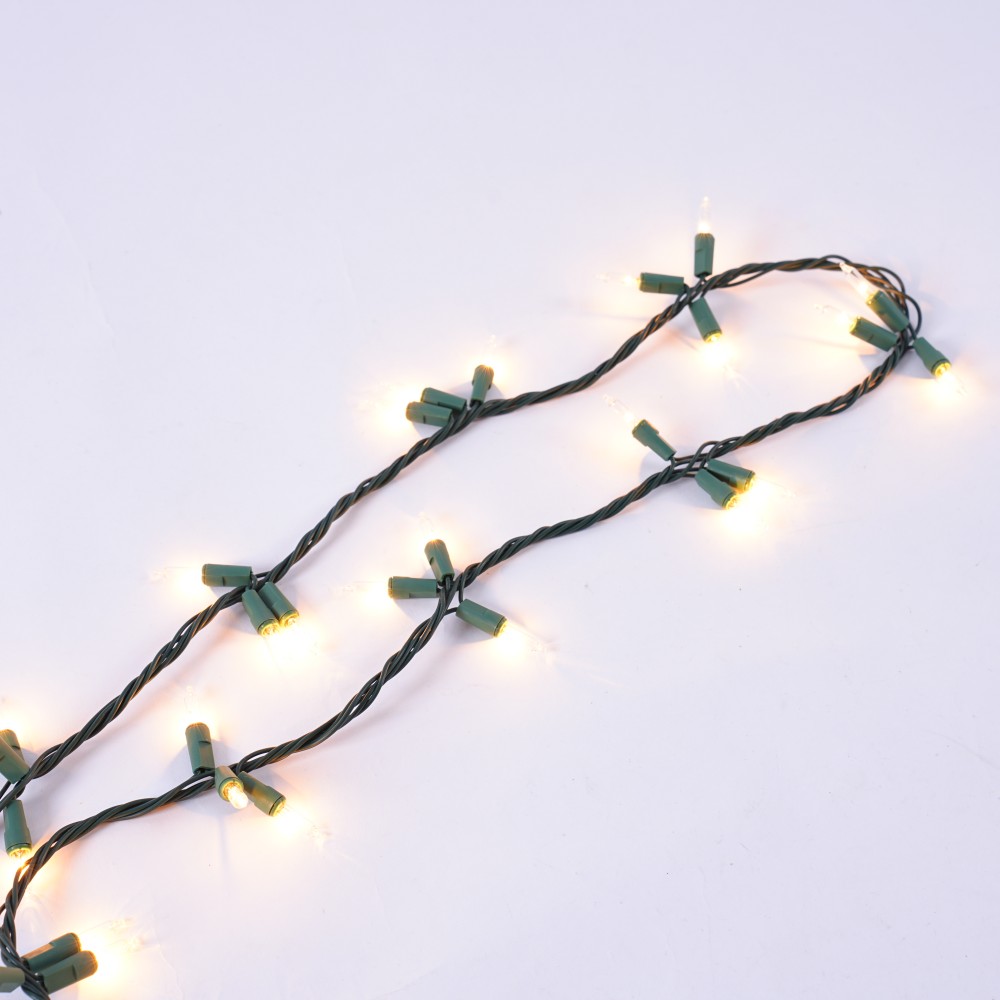
How Cold Temperature Influences LED Brightness
LED chips usually perform differently from traditional bulbs
Cold weather does not always reduce LED brightness. Unlike incandescent bulbs, LED components generally operate efficiently at lower temperatures because cooler environments help reduce heat accumulation around the semiconductor.
However, the complete lighting system includes more than LED chips. Controllers, drivers, batteries, and power adapters may react differently under low temperatures.
- LED chips can maintain stable light output in cold environments
- Electronic drivers may experience slower response under freezing conditions
- Battery-powered systems may lose available energy during cold periods
Temperature impact on different components
| Component | Cold Weather Effect | Possible Brightness Change |
| LED module | Generally stable at lower temperatures | Small or no reduction |
| Power adapter | Reduced electronic efficiency in extreme cold | Possible output fluctuation |
| Battery pack | Chemical activity decreases | Shorter runtime and dimmer output |
| Plastic housing | Material becomes less flexible | Higher risk of cracks or sealing issues |
Why Wet Weather Can Make Lights Appear Dimmer
Moisture affects electrical stability
Rain itself does not automatically reduce LED brightness. Problems usually appear after moisture enters areas that should remain protected, such as connectors, control boxes, or cable joints.
Water intrusion may create several issues:
- Higher electrical resistance at connection points
- Corrosion on metal contacts that reduces current transmission
- Short-term voltage instability affecting LED output
- Internal condensation inside protective covers
Outdoor lighting guides commonly emphasize that water entering electrical components can create failures, short circuits, and long-term damage. Proper sealing and suitable weather ratings help reduce these risks.
Waterproof Rating and Brightness Protection
Understanding IP ratings
The protection level of outdoor decorative lights is often described through an IP rating. The first number represents protection against solid particles, while the second indicates resistance to water penetration.
| IP Rating Example | Protection Meaning | Outdoor Application |
| IP44 | Protection from splashing water | Covered outdoor areas |
| IP65 | Dust protection and water jets resistance | Gardens, trees, outdoor decorations |
| IP67 | Higher protection against temporary water exposure | More demanding outdoor environments |
Outdoor Christmas lighting products often use ratings such as IP65 or IP67 to improve resistance against rain and seasonal weather changes.
Power Supply Problems Behind Reduced Brightness
The adapter may become the weakest part
Many users focus on the LED bulbs but overlook the power source. A light string can contain efficient LED chips while still experiencing brightness loss caused by an unstable adapter.
- Voltage drop reduces current reaching LED sections
- Cold-weather stress affects adapter performance
- Moisture exposure damages internal electronic components
Some outdoor lighting users report situations where lights become dim after installation outside, with possible causes including overloaded power supplies, cable damage, or unsuitable connections rather than the LED itself.
Why Some Lights Dim After Snow or Rain But Recover Later
Temporary moisture and temperature effects
A common situation occurs after a cold rainy night: the lights appear weaker, but brightness returns after drying or warming up.
This pattern may happen because:
- Condensation temporarily affects electrical contacts
- Cold temperatures reduce battery output
- Protective materials contract and change sealing pressure
Temporary recovery does not always mean there is no damage. Repeated moisture cycles may gradually weaken connectors and insulation materials.
Cold and Wet Weather Performance Comparison
| Weather Condition | Possible Effect | Recommended Attention |
| Light rain | Usually no brightness change with proper protection | Check sealing quality |
| Heavy rain | Risk of connector moisture entry | Protect power connections |
| Freezing temperature | Possible adapter or battery performance reduction | Confirm temperature range |
| Snow and ice buildup | Mechanical stress on wires and connectors | Remove excessive ice weight |
Ways to Maintain Stable Brightness During Winter
Installation habits affect long-term performance
- Keep adapters away from direct rain by using covered locations or waterproof boxes
- Avoid placing connectors close to wet ground where water collects
- Leave enough cable flexibility to prevent cracking during freezing temperatures
- Choose suitable outdoor-rated products based on local climate conditions
Cold and wet weather does not automatically cause outdoor Christmas lights to lose brightness. The actual performance depends on the entire lighting system, including LED components, power drivers, waterproof structure, and installation environment.
Outdoor Christmas Tree Decoration Lights can maintain stable illumination throughout winter seasons with proper weather protection and suitable design features. Brightness changes usually appear because moisture, temperature stress, or electrical instability affects supporting components rather than the LED chips alone.
Understanding these hidden factors helps users create reliable holiday displays while keeping outdoor trees glowing through rain, snow, and cold nights.

Don't Miss New Releases & Subscriber Exclusives
Sign up for our newsletter to stay in the holidy spirit all year.
Further Questions? Contact Us
-
Useful Links
Home Products About Us Production Services News Contact Us -
Classification
Mini String Light LED Light Set Garland Light Light-up Spiral Trees LED Curtain Lights Battery Light LED Copper Wire Light Decorative Light -
Contact Info
zd@zflgf.com.cn+86-576-82467401
+86-13968612122 ( Ms. Zhang )
+86-13505747679 ( Mr. Tan )
+86-15062835074 ( Mr. Cheng )No.270 Zhenxi Road, Xinqiao Town, Luqiao District, Taizhou City, Zhejiang Province, China -


Holiday Lights Supplier