

Garland Lights Supplier
Home / Products / Garland Light

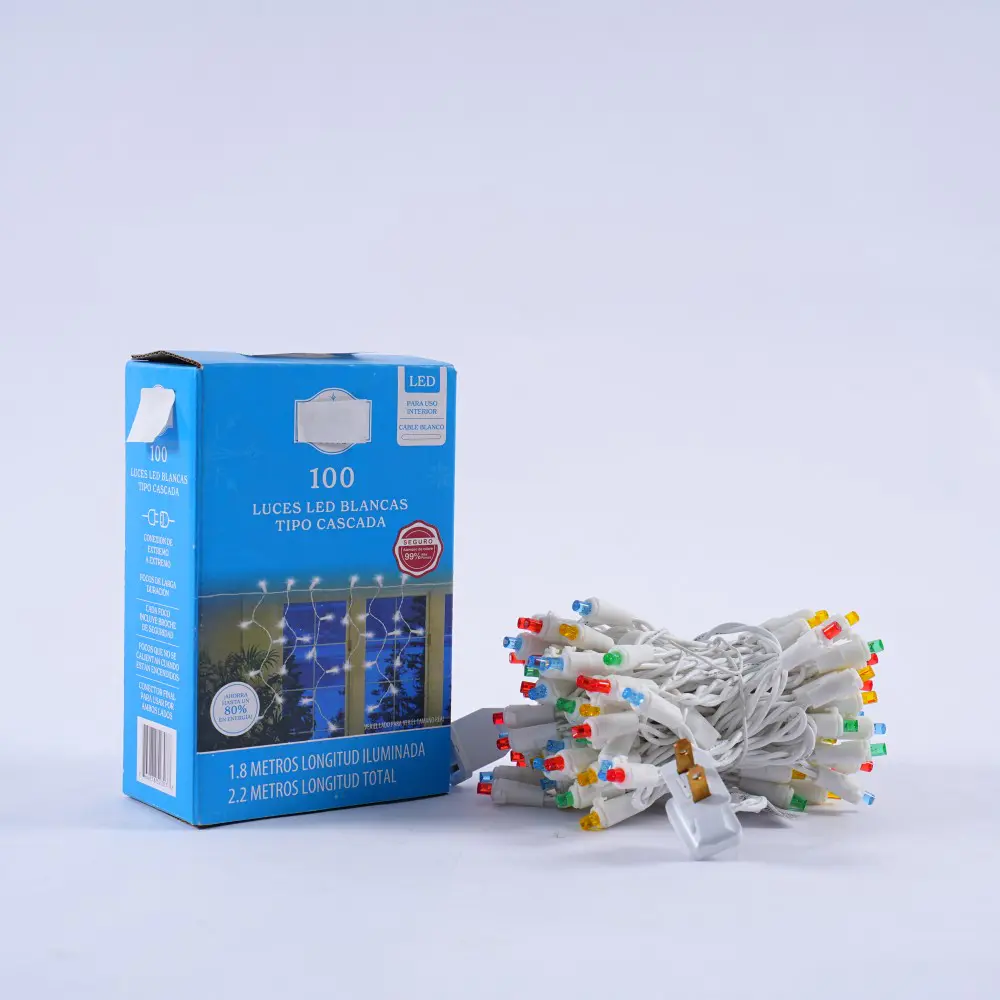
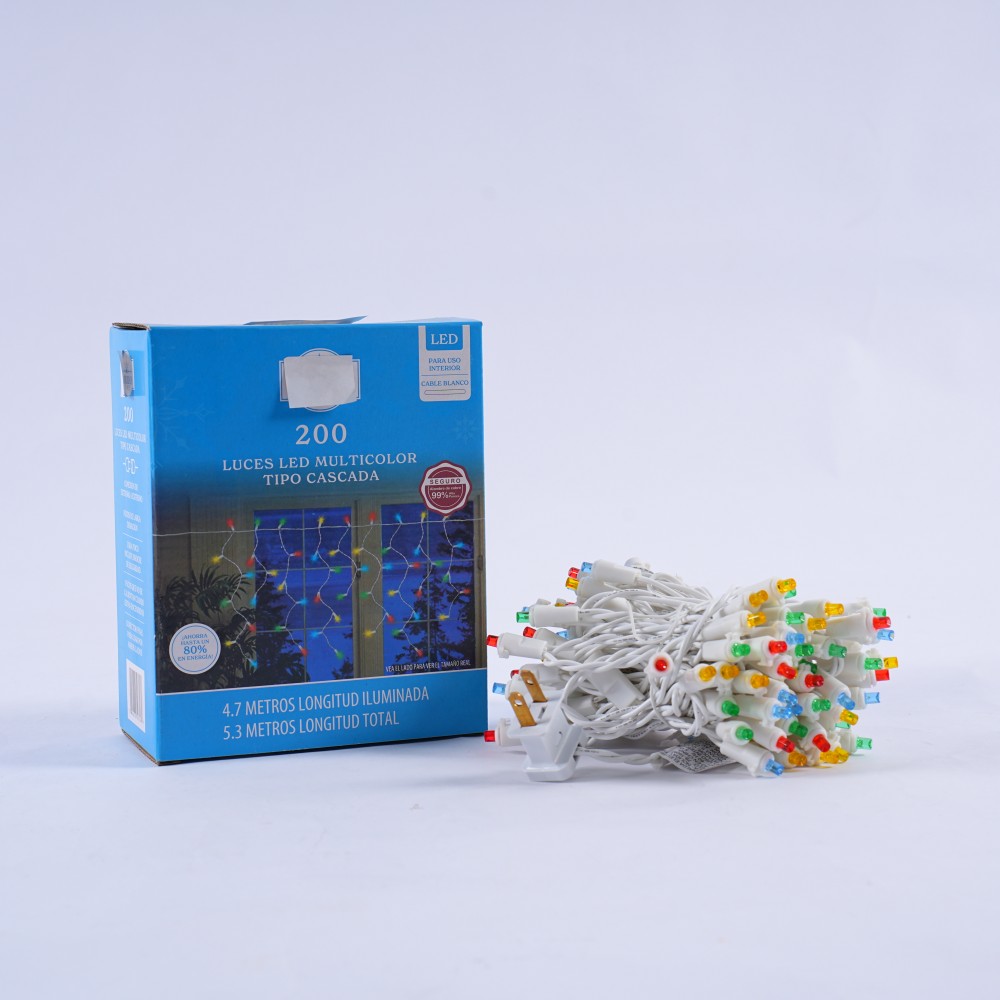
Multicolor Garland Lights Manufacturer

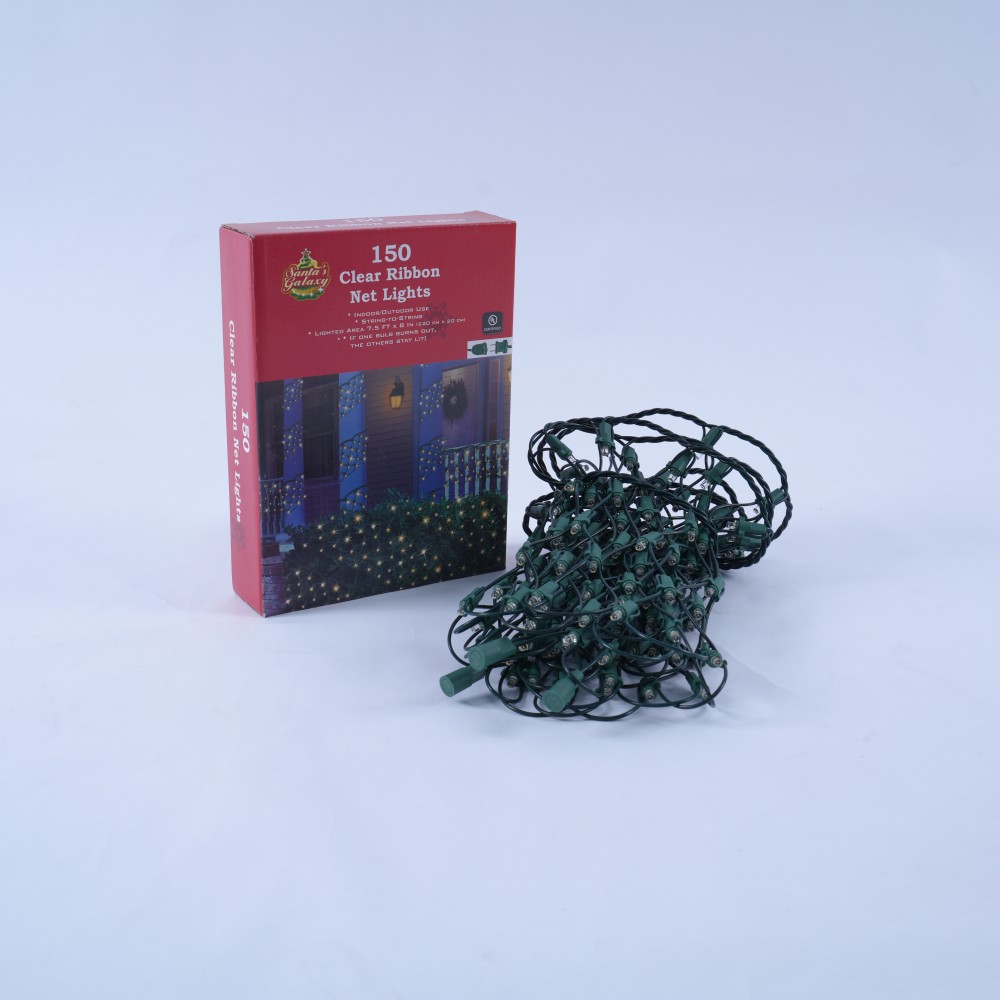
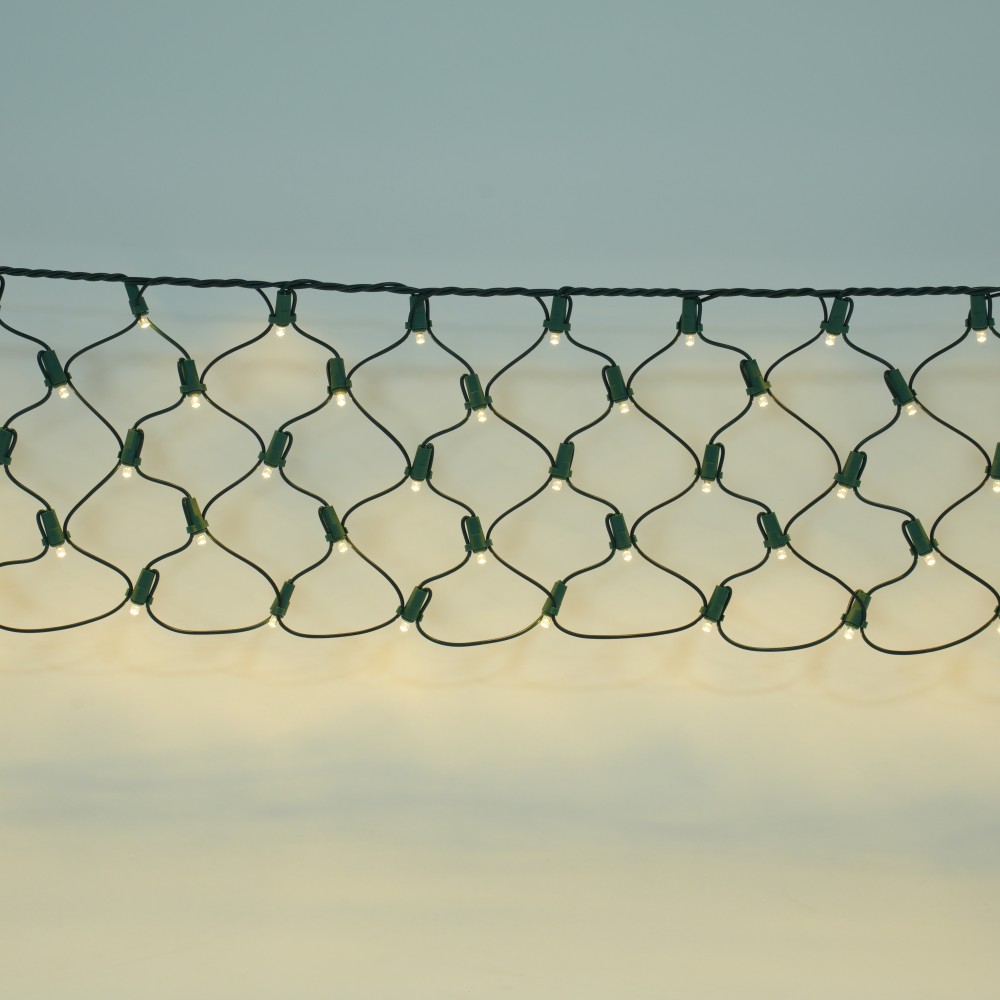
As a manufacturer, our Garland Lights are high-quality lighting products designed for both festive and general decoration.

The features of this product line are as follows:

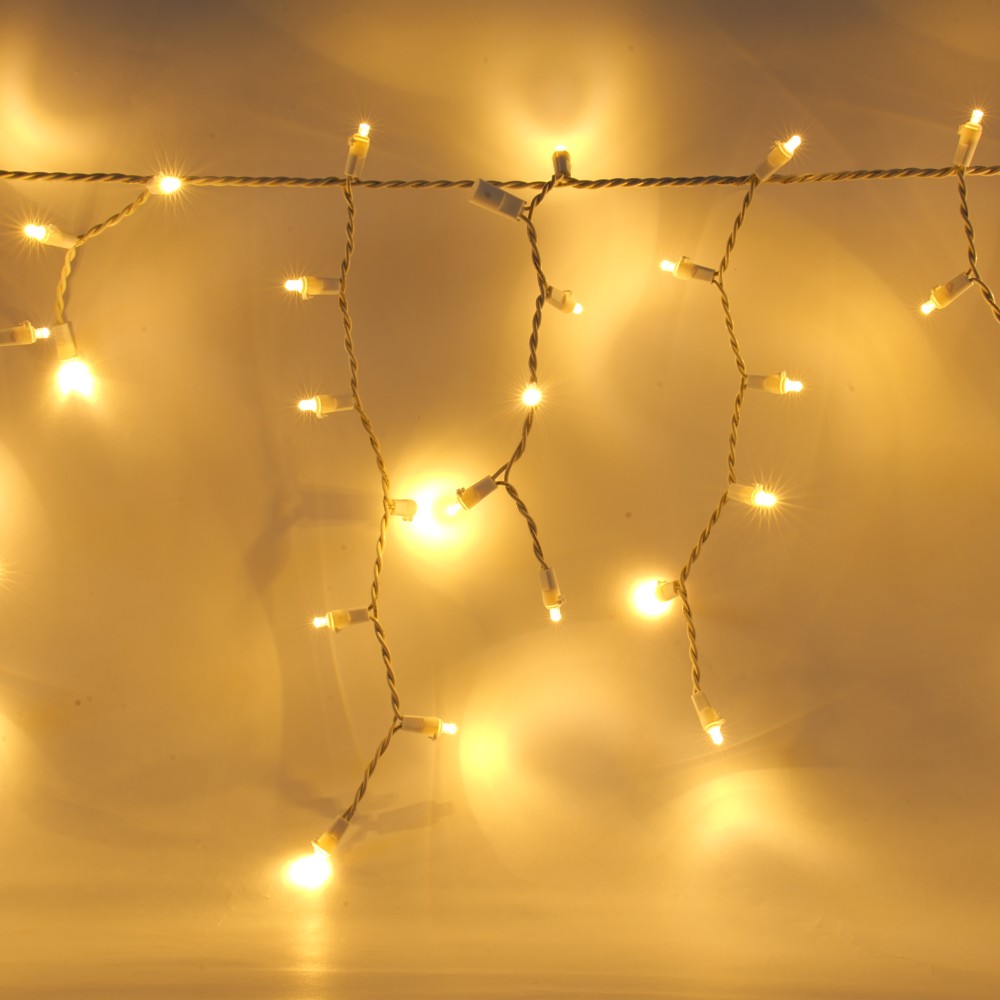
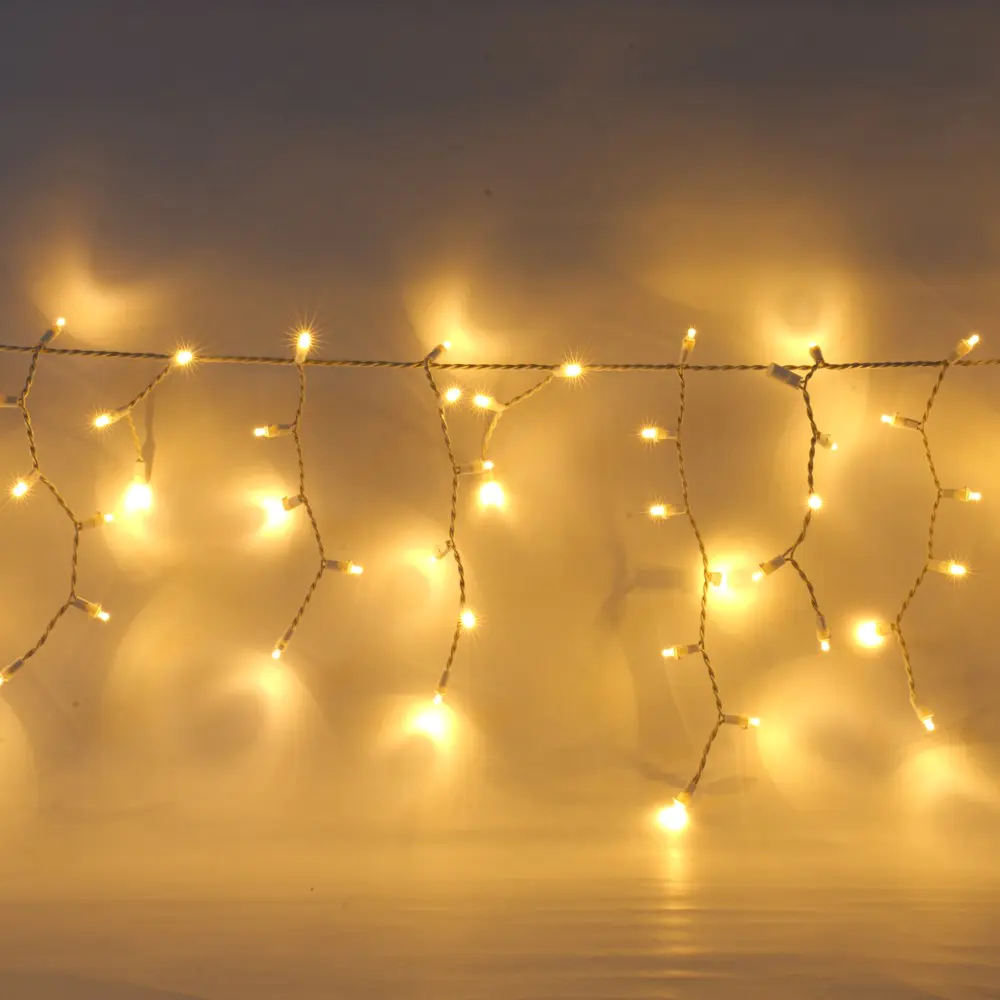
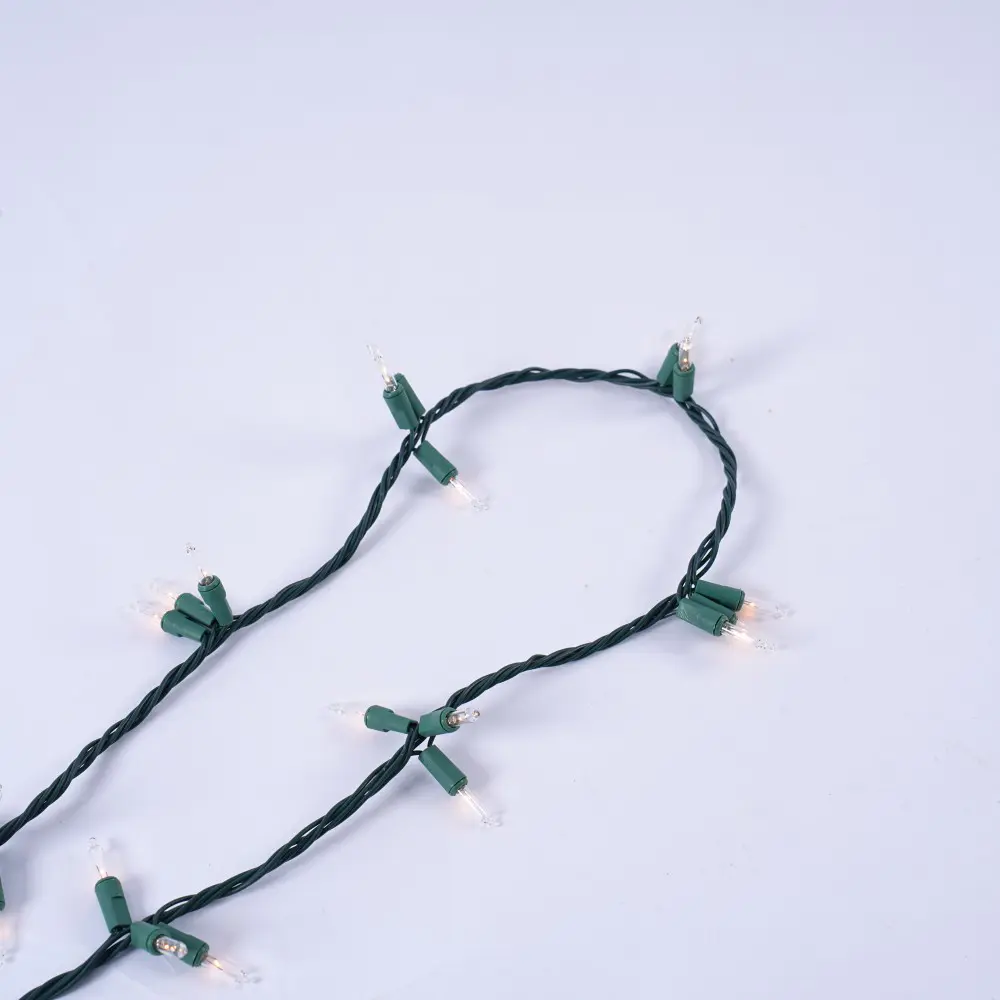
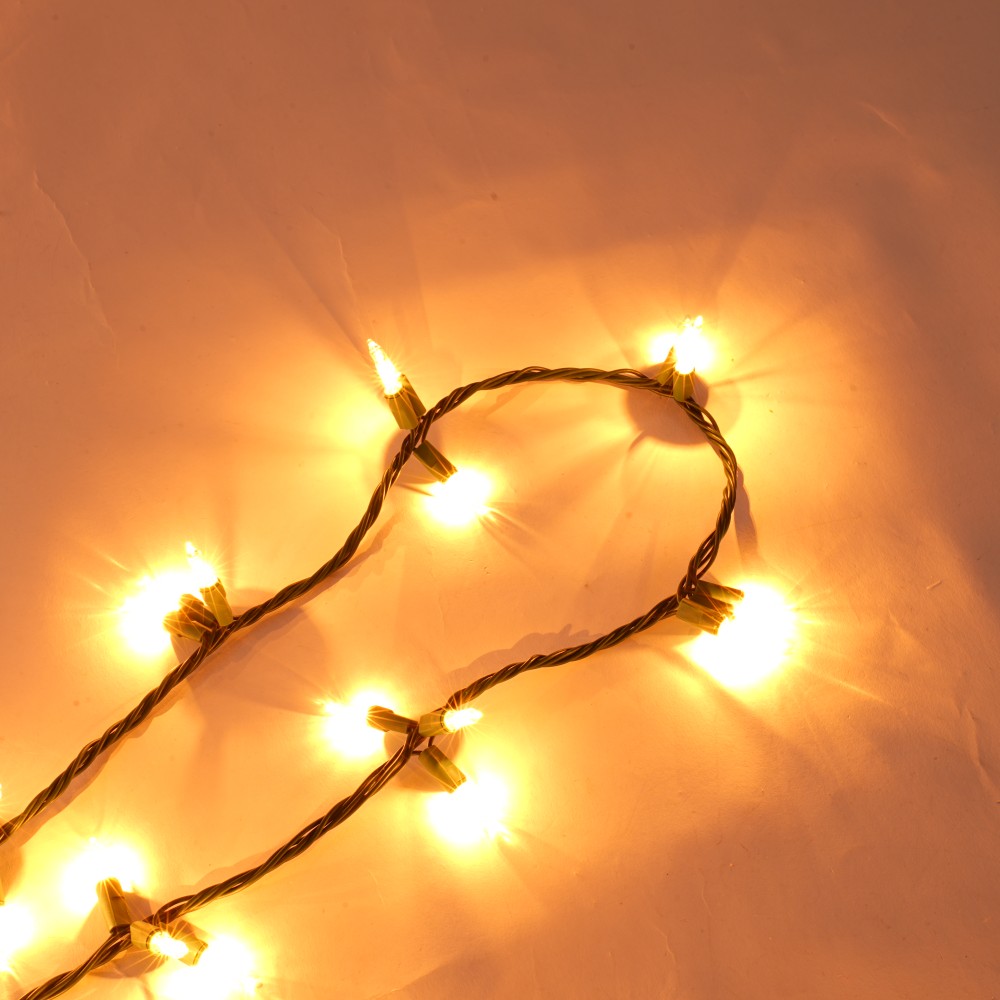
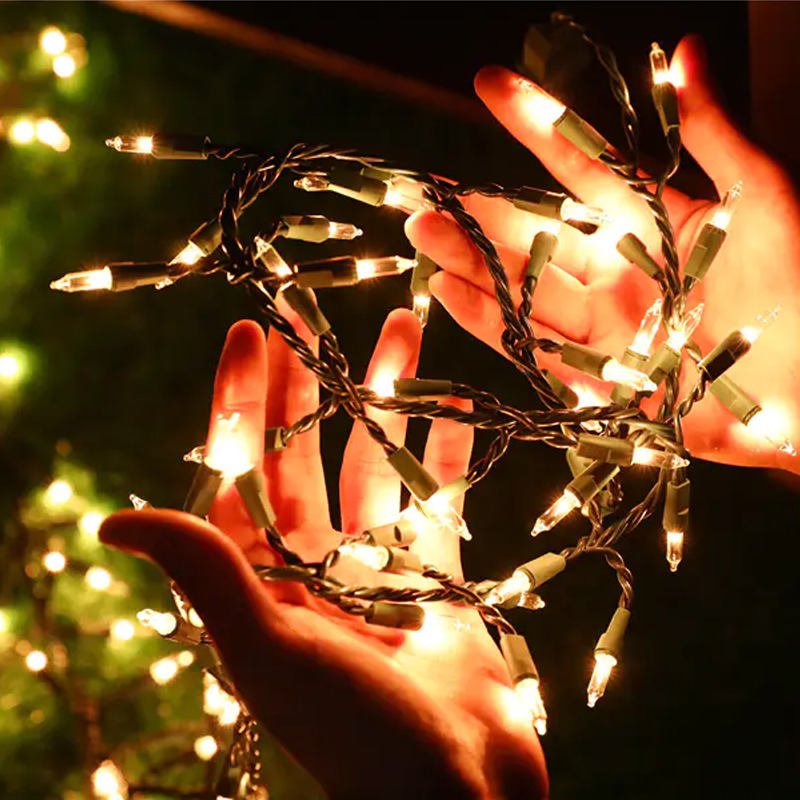
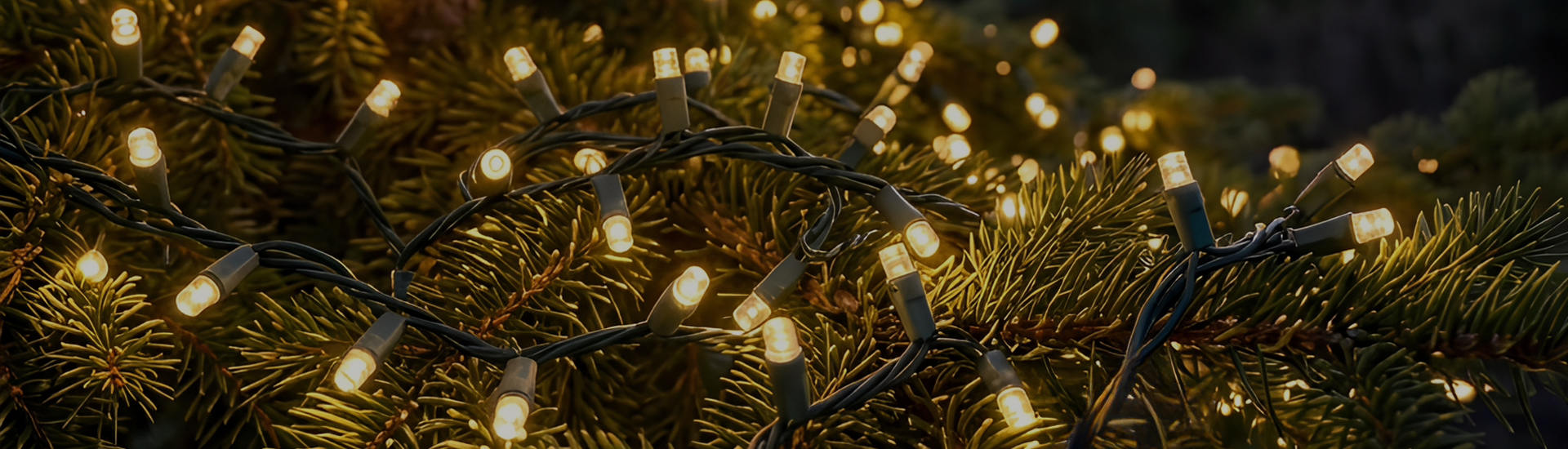
Garland Lights combine a flexible stem with evenly distributed LEDs to mimic the forms of traditional green wreaths or branches, offering both decorative and luminous effects. Commonly available in single-color warm white, pure white, and multi-color options, they offer stable luminous efficiency, energy saving, and durability. The structural design balances flexibility and strength, allowing for bending and wrapping around columns, door frames, railings, stairs, and other spaces.

These lights typically come with a standard power system, supporting various plug specifications and featuring a waterproof design (suitable for outdoor environments), making them suitable for lighting needs in festivals, markets, shop windows, and home patios. We can provide customization services for cord length, lamp spacing, color, and packaging to meet diverse project applications.

About Us
Taizhou Mingde Decorative Lighting Co., Ltd.

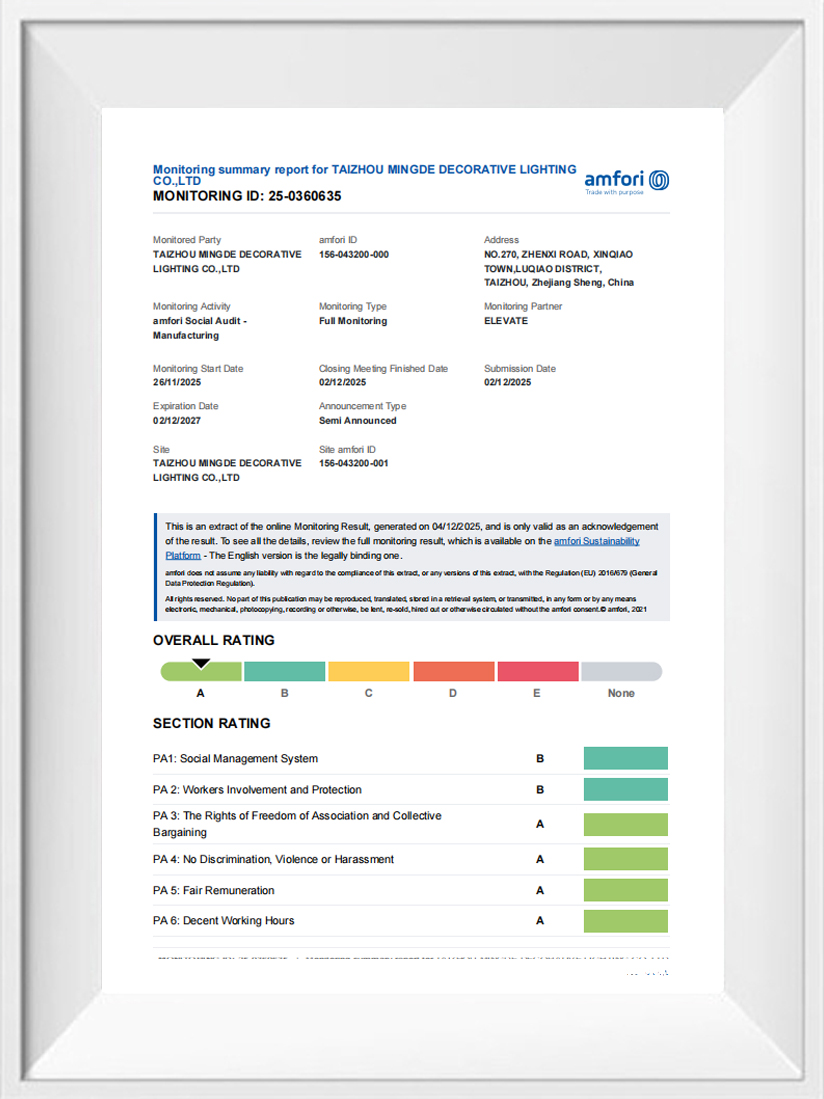
Taizhou Mingde Lighting Co., Ltd., with an annual production capacity of 10 million strings of festive lights, is one of the largest export bases for festive lights in China. Formerly part of Zhejiang Festival Lighting General Factory, it was founded in 1968. In the 1990s, former national leaders such as Jiang Zemin, Li Ruihuan, and Qiao Shi visited the old factory, and it was even honored to have its name personally inscribed by President Jiang Zemin. The company has repeatedly won honors such as Advanced Unit and First-Class Enterprise, enjoying a good reputation in the Christmas lighting industry.

The company was among the first in the domestic industry to obtain UL certification in the United States, and its main sales markets are the United States and Central and South American countries. The company established an ISO9001 quality system in 1997. Product types include linear lights, icicle lights, net lights, circular lights, spiral trees, and a series of string lights such as LED, copper wire lights, and cord lights. The company possesses advanced equipment for festive lights, including wire production equipment, fully automatic plastic molding machines, automatic bubble threading machines, string light assembly machines, automatic copper strip punching machines, winding machines, automatic buckle cutting machines, copper wire light manufacturing equipment, cord light manufacturing equipment, etc. Materials are sourced and manufactured according to international standards. From component production to string assembly, every step is rigorously controlled, making it an integrated, standardized enterprise with a seamless production-to-shipment process.

A clean and tidy environment, fixed monthly learning sessions, and a variety of recreational activities perfectly align with the company's vision: to create a happy life for employees and build a "Mingde Spiritual Home."

Mingde employees believe that customer satisfaction is our sole wish. We make lights with heart, conveying the light and joy of love!

All colleagues at Mingde Company welcome domestic and international customers to visit and guide us, and to work together for mutual progress!

Certificate Of Honor
  • Certification
Message Feedback

Mini Multicolor Garland Lights and Fairy Lights: Uses, Differences, and When to Choose Each

What Are Mini Multicolor Garland Lights Typically Used For?

Mini multicolor garland lights occupy a specific corner of the decorative lighting world. They are not subtle. They are not meant to be. These are the lights people notice from across a room or down a block.

Wrapping stair railings and banisters

Indoors, mini multicolor garland lights turn a plain staircase into a festive centerpiece. The thin wire allows wrapping around each baluster individually or spiraling the entire handrail in one continuous run. Multicolor works especially well for children's birthday parties, Easter brunches, and obviously Christmas. The key is density—one strand per two feet of railing looks sparse. Two strands per foot creates the full, lush look that photographs well.

Outdoor tree trunk wrapping

A common mistake: wrapping only the branches of a deciduous tree in winter. The trunk matters more. Mini multicolor garland lights spiral up the main trunk from ground level to the first branch junction. The colors catch attention even from moving cars. For corner lots, wrapping two or three trunks in the same color pattern creates a gateway effect. Leave the upper branches dark—the contrast between lit trunk and bare branches reads as intentional design.

Party tents and canopy borders

Event planners use mini multicolor garland lights to define the perimeter of a tent or canopy. The lights clip to the edge of the fabric or weave through the frame poles. Multicolor suits casual for celebrations like graduations and backyard weddings. For formal events, white or amber works better. The practical advantage of garland-style lights over individual C7 or C9 bulbs: the entire strand packs flat for storage and unrolls without untangling individual sockets.

Bedroom headboards and window frames

Teen bedrooms and dorm rooms frequently feature mini multicolor garland lights draped across headboards or taped around window trim. The use case here is ambiance, not illumination. The multicolor glow replaces harsh overhead lighting during late-night studying or movie watching. Battery-operated versions allow placement anywhere without extension cords. The trend among younger users: programmable strands that cycle through colors slowly rather than flashing rapidly.

Seasonal mantel displays

Fireplace mantels get decorated for every holiday. Mini multicolor garland lights laid along the mantel edge (not draped) provide backlighting for garlands, stockings, or seasonal figurines. The wire hides behind the mantel lip. Only the glowing bulbs show. For Valentine's Day, a red-white-pink combination. For Halloween, orange-purple-green. The same strand works year-round because the color pattern changes with the season it decorates.

What Is the Difference Between Fairy Lights and Multicolor Garland Lights?

At first glance, both products look similar: a long wire with many small bulbs. But fairy lights and multicolor garland lights serve different purposes, use different construction methods, and create different visual effects.

Wire flexibility and copper core

Fairy lights almost always use very thin, highly flexible copper wire. The wire bends and holds shape. Users wrap fairy lights around delicate objects—wine bottles, mason jars, flower arrangements—without fighting springback. The wire can be twisted into letters or spirals. Garland lights use standard PVC-insulated wire with copper or aluminum cores. That wire bends but does not hold complex shapes. It springs back toward straight. Garland lights work on straight or gently curved surfaces. Fairy lights work on intricate, small-radius forms.

Bulb spacing and visibility

Fairy lights typically space bulbs 5–10 centimeters apart. The bulbs themselves are tiny (3mm or 5mm diameter) and often sit flush against the wire. The effect is a continuous dotted line of light, almost like a glowing thread. Garland lights space bulbs 10–20 centimeters apart. The bulbs are larger (often 8–12mm) and sit on raised sockets. The effect is distinct points of light with visible gaps between them. For wrapping a narrow tree branch, fairy lights create a unified glow. Garland lights create a string of individual colored dots.

Durability comparison

Feature

Fairy Lights

Multicolor Garland Lights

Wire material

Thin copper (0.2–0.4mm)

PVC-coated copper or aluminum (1.0–1.5mm)

Weather resistance

Low (indoor only for most)

Moderate (some outdoor-rated options)

Repairability

Difficult (soldering required)

Easy (socket-style bulbs twist out)

Tangle resistance

Poor (coils easily)

Good (thicker wire resists knots)

Typical lifespan

10,000–20,000 hours

15,000–25,000 hours

Power source and battery options

Fairy lights commonly run on small battery packs (2xAA or 3xAAA). The low power draw of copper-wire LEDs allows 50–100 hours from alkaline batteries. Garland lights typically use plug-in transformers. Battery-operated garland lights exist but they drain cells quickly because the larger bulbs draw more current. For placement far from outlets (centerpieces on dining tables, wreaths on interior doors), fairy lights offer convenience. For all-day operation on a mantel, plug-in garland lights avoid battery replacements.

Visual density and perceived brightness

Stand three meters away from each type. Fairy lights appear as a soft, continuous ribbon of light. Individual bulbs blend together. Garland lights appear as distinct, sparkling points. The gaps between bulbs read as dark spaces. For subtle background ambiance, fairy lights work. For visible, cheerful accents that demand attention, multicolor garland lights perform better.

The practical decision rule

Choose fairy lights when the project involves:

  • Wrapping small-diameter objects (pencils, bottle necks, thin branches)
  • Battery-powered placement away from outlets
  • Subtle, warm ambiance rather than festive statement
  • Malleable wire that holds custom bends
  • Choose multicolor garland lights when the project involves:
  • Defining borders along railings, mantels, or rooflines
  • Outdoor use (with weatherproof rating)
  • Visible, cheerful seasonal decorations

Replacing individual bulbs instead of entire strands

Both products have their place. The mistake is using fairy lights where garland lights would hold up better, or garland lights where fairy lights would be easier to shape. Match the tool to the task.