

 中文简体
Cool Flexible Lamp Tape: A Practical Guide to Versatile LED Strip Lighting
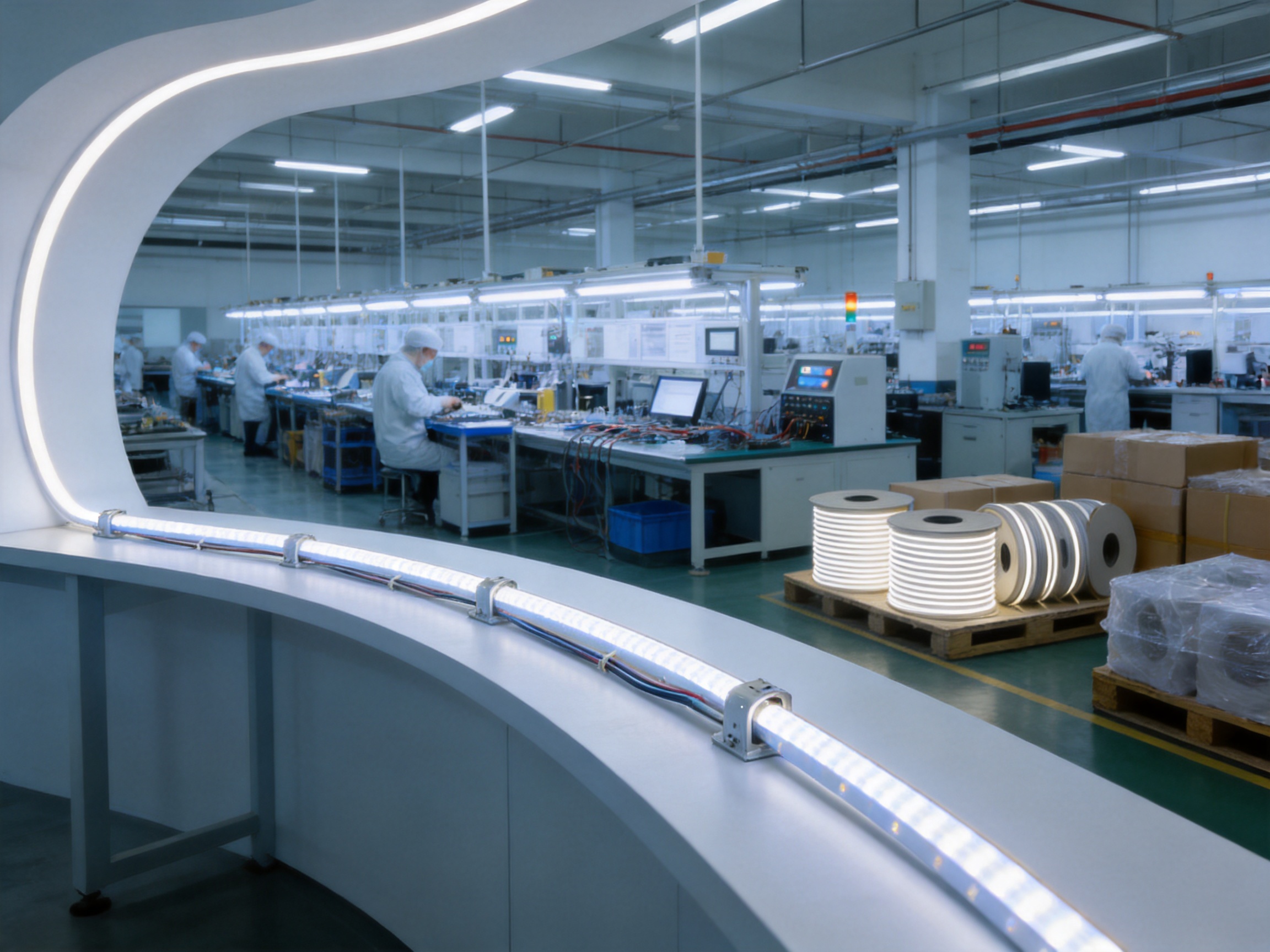
Flexible lamp tape has become one of the most adaptable forms of decorative and ambient lighting. Unlike fixed lamps or conventional rigid fixtures, a flexible LED strip can follow curves, outline architectural features, illuminate narrow spaces, and add atmosphere to both residential and commercial environments. The Cool Flexible Lamp Tape, model MDFL001, is designed for applications that require a cool white lighting effect, flexible installation, energy-conscious operation, and dependable decorative performance.
Made from copper, LED components, and silica gel, this flexible lamp tape combines a conductive foundation with compact light sources and a protective flexible material. Its total length starts at 16.4 feet, or more depending on the production requirement, while its rated power is 15W. The product is identified for indoor and outdoor use and is supported by CE, REACH, and BSCI certifications. These features make it suitable for decorative projects, seasonal displays, retail interiors, hospitality environments, event settings, and many other lighting applications.
This article examines the structure, performance, installation possibilities, commercial value, and manufacturing strengths associated with this type of cool flexible light. It also explains how a specialist decorative-lighting manufacturer can support large-volume buyers through integrated production, quality control, export experience, and product development capabilities.
What Is Cool Flexible Lamp Tape?
Cool Flexible Lamp Tape is a linear LED lighting product formed from a flexible strip structure. The LEDs are positioned along the strip to create continuous or closely spaced illumination. The flexible body allows the product to bend and follow surfaces that would be difficult to reach with traditional lamps. It can be installed around corners, along shelves, beneath cabinets, behind signs, around displays, or across decorative structures.
The “cool” characteristic refers to its cool white appearance. Cool white illumination generally creates a clean, crisp, and contemporary visual impression. It can help make display areas look bright and organized, emphasize architectural edges, and provide a more energetic atmosphere than warmer decorative lighting. This makes it useful for retail settings, modern interiors, event installations, and seasonal window displays where clarity and visual impact are important.
The product is not limited to one decorative style. It can function as accent lighting, outline lighting, background lighting, display lighting, or an additional illumination layer. When combined with other decorative products, such as string lights, curtain lights, spiral trees, or copper wire lights, it can help create coordinated lighting scenes for holidays, commercial events, celebrations, and everyday interior decoration.
Core Product Specifications
The following table summarizes the principal information available for model MDFL001.
| Specification | Product Detail |
|---|---|
| Model | MDFL001 |
| Product name | Cool Flexible Lamp Tape |
| Materials | Copper, LED, and silica gel |
| Light color | Cool white |
| Total length | 16.4 feet or more |
| Application characteristic | Indoor and outdoor use |
| Minimum order quantity | 500 units |
| Power | 15W |
| Certifications and compliance | CE, REACH, and BSCI |
These specifications position the product as a practical option for distributors, project purchasers, retailers, event suppliers, and other professional buyers. The 16.4-foot starting length provides sufficient coverage for many decorative applications while retaining the flexibility to plan multiple sections or connected layouts. The 15W power rating supports an energy-conscious approach compared with many conventional decorative lighting systems, although actual energy use will depend on operating time, control equipment, and installation configuration.
Construction and Material Advantages
Copper Conductive Base
Copper is used as a key material in the lamp tape structure. It is widely valued in electrical applications because of its conductive properties. In a flexible light, the conductive element must support the distribution of electrical power along the strip while remaining compatible with bending and compact assembly. A copper-based structure helps create a practical foundation for the LED circuit.
The use of copper also supports the production of a slim and adaptable lighting format. Traditional lighting fixtures often require rigid housings, fixed brackets, or large internal components. A flexible strip can achieve a lower-profile appearance and can be positioned in places where a bulky fixture would be visually distracting or physically difficult to install.
LED Light Sources
LED technology is central to the product’s value. LEDs are compact, efficient, and well suited to linear arrangements. Their small size enables the strip to provide illumination while maintaining a flexible form. LED technology also makes it possible to develop multiple visual effects, including steady illumination, dimming, blinking, chasing, and color-based programming when compatible controllers or versions are used.
The supplied model is identified as cool white, giving it a consistent and clean appearance for applications that do not require a warm or colorful light source. For professional buyers, a clearly defined color characteristic can simplify product positioning. It can be marketed for modern interiors, retail displays, signage, architectural accents, seasonal installations, and commercial environments where a cool visual tone is preferred.
Silica Gel Protection
Silica gel contributes to the flexible outer structure of the product. It helps the strip retain flexibility while providing a protective covering around the internal lighting elements. This type of material is particularly useful for a product that may be bent, shaped, or placed in areas where the lighting assembly needs additional protection from routine handling.
The use of a flexible protective material also supports a more streamlined appearance. Instead of exposing the internal LED components and conductive paths, the covering creates a finished surface that is easier to integrate into decorative designs. Buyers should always confirm the specific environmental rating, installation method, connectors, and sealing requirements for demanding outdoor or wet-area projects. “Indoor and outdoor use” indicates broad application suitability, but project conditions may still require appropriate mounting, power, and protection practices.

Cool Flexible Lamp Tape
Flexible Installation for Irregular Spaces
One of the strongest advantages of flexible lamp tape is its ability to adapt to irregular surfaces. The product can be guided around corners, curves, arches, frames, and decorative forms. This is especially valuable where a standard linear lamp would leave gaps or require several separate fixtures.
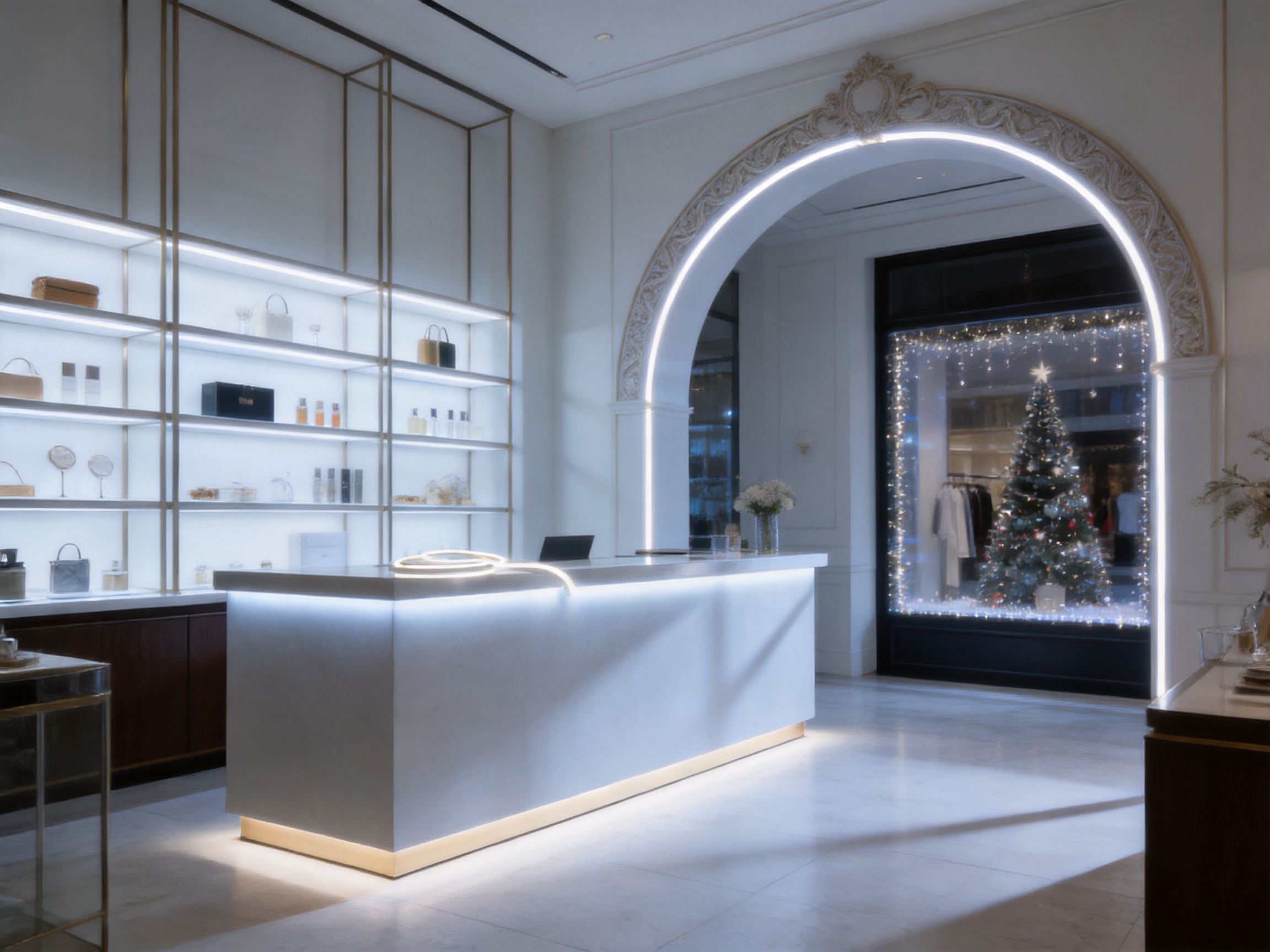
In a retail display, for example, the strip can trace the perimeter of a product shelf or cabinet. In a hospitality environment, it may be used beneath counters, along reception desks, or around architectural details. In a home, it can provide accent illumination behind a television, beneath a kitchen cabinet, along a staircase, or around a headboard. For seasonal decoration, it can outline windows, doors, display panels, signs, and temporary structures.
Flexible installation also reduces the need to design the entire space around the lighting fixture. Instead, the lighting can be shaped to suit an existing design. This is a major difference from rigid tube fixtures or fixed lamps, which may require precise measurements and additional fittings to navigate corners and transitions.
Lighting Effects and Control Possibilities
Flexible LED strips are capable of producing more than a simple steady glow. Depending on the control system and product configuration, they can support several visual effects. These effects allow buyers and installers to create different moods without changing the underlying lighting structure.
Steady Cool White Illumination
The primary effect of the MDFL001 model is cool white illumination. A steady cool white setting is appropriate for clean, bright, and contemporary installations. It can emphasize edges and surfaces without the visual warmth associated with amber or warm white lighting. In commercial settings, it can help products and displays appear clear and noticeable.
Dimming
Dimming allows the brightness to be adjusted according to the time of day, surrounding light, or desired atmosphere. A lower brightness level can provide subtle background illumination, while a stronger setting can increase visibility around a display or architectural feature. Whether dimming is available depends on the selected controller and electrical configuration, so professional buyers should confirm the control system when planning a project.
Blinking and Strobe Effects
Blinking effects can introduce movement and energy into festive displays, event decoration, entertainment venues, and promotional installations. A slower blink may create a gentle twinkling effect, while a faster sequence can make the display more dynamic. These settings should be selected according to the environment and audience, especially in locations where excessive flashing may be unsuitable.
Chasing Effects
A chasing effect creates the impression that light is traveling along the length of the strip. This can add direction and movement to a storefront, stage background, event structure, or seasonal display. Chasing patterns are particularly useful when the lighting itself is intended to attract attention rather than remain a quiet architectural accent.
Rainbow and Color-Change Effects
Some flexible LED strip configurations support gradual color changes or rainbow sequences. The supplied product is specified as cool white, so buyers should distinguish between the standard cool white model and any separate multicolor or programmable versions. Color-changing functions require compatible LEDs, controllers, and power arrangements. When available, these effects can broaden the product’s use in parties, entertainment venues, themed displays, and experiential retail environments.
Indoor and Outdoor Applications
The product is described for indoor and outdoor use, providing flexibility for different project categories. Indoor applications benefit from the strip’s slim profile and ability to fit into furniture, ceiling details, cabinets, displays, and narrow decorative spaces. Outdoor applications can include covered architectural areas, event structures, seasonal displays, shopfronts, patios, and other locations where a flexible light source is preferred.
For outdoor projects, installation planning is essential. The power supply, connectors, mounting method, drainage, exposure to rain, and protection of electrical joints should be reviewed before installation. The strip should be installed according to the applicable technical instructions and local electrical requirements. If the project involves continuous exposure to severe weather, standing water, high heat, or freezing conditions, the buyer should request detailed environmental specifications before placing an order.
Indoor use offers a wide range of design possibilities. The strip can be hidden behind a surface to create indirect illumination, or it can be placed visibly as part of a decorative outline. Concealed installation often produces a smooth glow, while visible installation can emphasize the linear character of the product. In both cases, careful positioning helps prevent unwanted glare and improves the final appearance.
Advantages Compared with Conventional Decorative Lighting
More Flexible Than Rigid Fixtures
Rigid fixtures are usually limited by their length, shape, and mounting direction. A flexible lamp tape can be bent and guided around many surfaces, making it suitable for complex layouts. This reduces the need for multiple short fixtures and can produce a more continuous visual line.
Lower-Profile Appearance
The compact strip format can be hidden within gaps or installed in narrow areas. This allows the designer to highlight the light effect rather than the fixture itself. The result can be cleaner than a large housing or exposed conventional lamp.
Efficient LED Operation
LED lighting is generally recognized for efficient energy use compared with many traditional lighting technologies. The 15W specification gives professional buyers a clear reference point for evaluating electrical requirements. Lower operating consumption can be valuable for displays that remain on for extended periods, although the actual savings depend on the installation and operating schedule.
Adaptable Decorative Performance
A single flexible format can serve many roles. It can outline, accent, backlight, frame, trace, or decorate. This versatility can help distributors serve multiple market segments without carrying an unnecessarily large range of rigid products.
Suitable for Custom Layouts
Flexible strips can be planned around the exact shape of a project. Rolls and longer lengths can help installers organize the product according to the required coverage. Before cutting or modifying any strip, the buyer should verify the designated cut points and product instructions. Proper planning helps preserve electrical performance and reduces material waste.
Broad Market Appeal
Cool white flexible lighting has a wide commercial audience. It can be marketed to home-improvement retailers, holiday-lighting distributors, event decorators, shopfitting contractors, hospitality suppliers, and architectural-lighting buyers. This broad appeal is a competitive advantage for wholesalers seeking a product that can be sold across more than one seasonal or decorative category.
Manufacturing Strengths Behind the Product
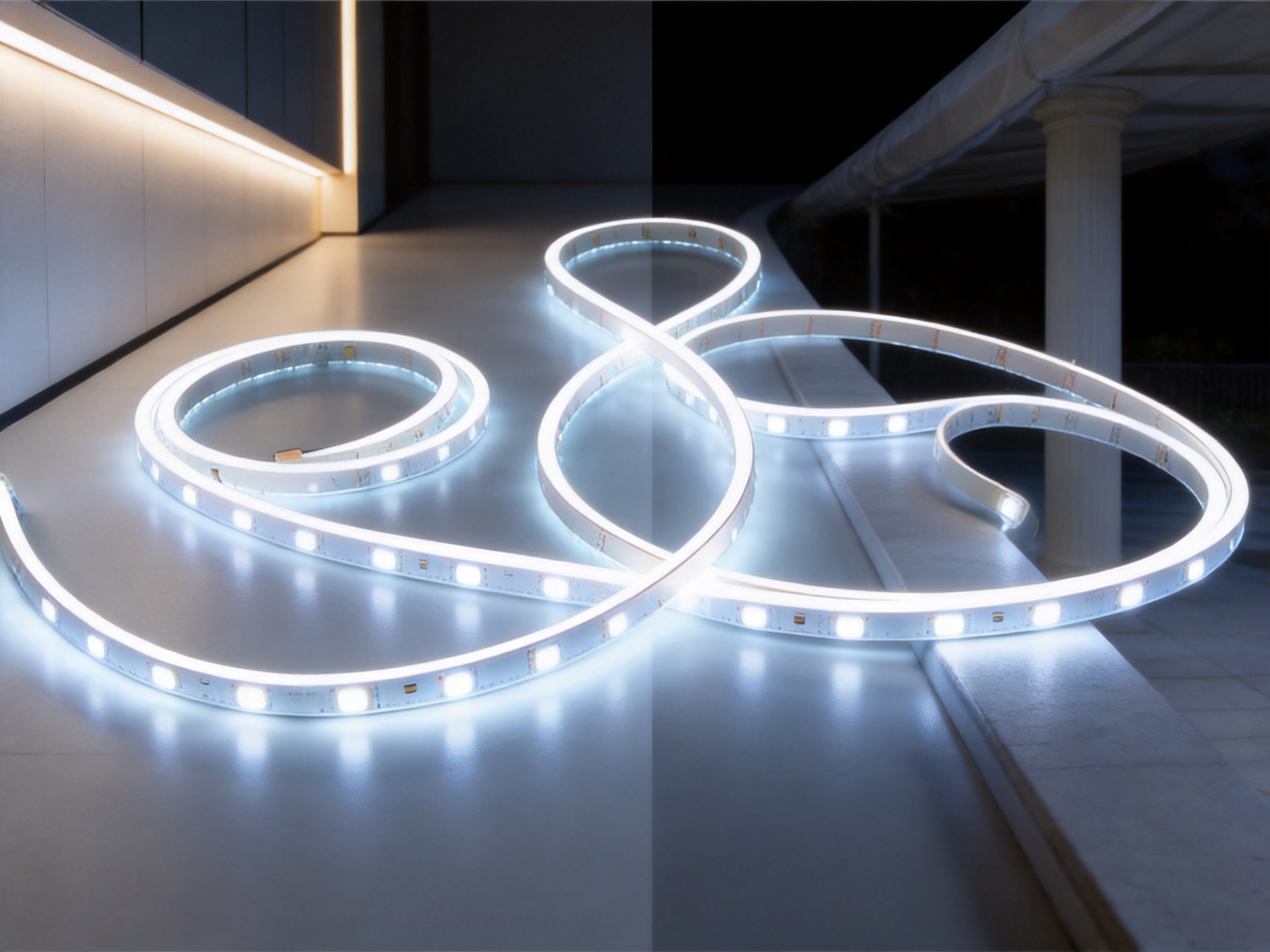
The quality of a flexible lamp tape depends not only on its visible appearance but also on the consistency of its internal materials, assembly process, testing, and packaging. A manufacturer with integrated lighting capabilities can manage more stages of production and maintain closer control over the finished product.
Taizhou Mingde Decorative Lighting Co., Ltd. has an annual production capacity of 10 million strings of festive lights. The company is described as one of China’s major export bases for festive lighting and has operated in the industry for many decades. Its history began in 1968, when it was formerly connected with Zhejiang Festival Lighting General Factory. This long operating background provides experience in product development, production organization, export documentation, and the practical requirements of international lighting markets.
Long-Term Industry Experience
More than five decades of industry involvement can provide valuable knowledge of seasonal demand, product reliability, assembly standards, packaging requirements, and international customer expectations. Decorative lighting markets often involve strict delivery schedules because products are linked to holidays, retail campaigns, exhibitions, and events. A manufacturer with long-term experience is better positioned to understand these timing pressures and organize production accordingly.
Historical experience also supports product diversification. The company’s product range includes linear lights, icicle lights, net lights, circular lights, spiral trees, LED string lights, copper wire lights, and cord lights. This broader portfolio can help buyers coordinate related products from one supplier and develop consistent lighting collections for a particular season or sales channel.
High Production Capacity
An annual capacity of 10 million strings of festive lights indicates substantial production resources. For professional buyers, capacity is important because it can support larger programs, repeat orders, seasonal replenishment, and coordinated product launches. The stated minimum order quantity for MDFL001 is 500 units, which provides a clear starting point for wholesale procurement while remaining relevant to distributors and project-based buyers.
High capacity does not replace quality control, but it can improve production planning when supported by standardized processes. Large-scale manufacturing allows the supplier to organize materials, components, assembly lines, testing stations, and finished-goods logistics in a structured way. This is particularly important for decorative lighting, where demand can rise sharply before major holidays.
Integrated Production Approach
The company is described as operating as an integrated and standardized lighting enterprise, with quality control extending from component manufacturing through final assembly and shipment. This approach can reduce dependence on disconnected production stages and make it easier to identify problems during manufacturing.
For flexible lamp tape, integrated control may cover material preparation, LED placement, conductive-path assembly, flexible covering, electrical connection, functional testing, appearance inspection, packing, and shipment preparation. Each stage contributes to the performance of the final product. Consistency in component placement can help maintain a uniform appearance, while proper covering and assembly can support durability during handling and installation.
Advanced Production Equipment
Advanced production equipment contributes to repeatability and efficiency. In a modern lighting factory, equipment may support accurate component placement, controlled assembly, reliable electrical connections, protective covering, and standardized inspection. The exact machinery used for a particular model should be confirmed with the supplier, but the company’s stated investment in advanced production equipment indicates a manufacturing structure designed for volume and consistency.
Equipment alone is not enough. Its value depends on process control, operator training, maintenance, calibration, and inspection procedures. A disciplined production environment combines machinery with experienced personnel and documented quality requirements. This combination is important for flexible lighting because small inconsistencies in spacing, soldering, covering, or connections can affect appearance and performance.
Quality Control from Components to Shipment
Quality control across the full production chain provides an advantage over suppliers that inspect only finished cartons. Component-level checks can identify problems before they become part of a completed strip. Assembly inspections can verify construction and connections. Functional testing can confirm that the lighting operates as intended. Final inspection and shipment checks can reduce the chance of incorrect quantities, damaged packaging, or mixed product specifications reaching the customer.
For buyers, it is useful to request information about inspection procedures, sampling methods, product testing, packaging standards, and production records. These details help convert a general quality statement into a practical purchasing process. They can also support private-label programs, retail compliance, and repeated seasonal orders.
Certifications and Responsible Supply Considerations
The MDFL001 product is listed with CE, REACH, and BSCI certification or compliance references. These designations are relevant to professional buyers evaluating international supply chains.
CE
CE marking is associated with applicable European Union product requirements. For lighting products, the precise scope depends on the product type, electrical design, and applicable directives or regulations. Buyers should request the relevant declaration and technical documentation for the exact model being purchased.
REACH
REACH relates to the control and communication of chemical substances in the European market. This is relevant to materials used in lighting products, cables, coatings, plastics, and packaging. REACH-related documentation can assist importers and distributors with their compliance responsibilities.
BSCI
BSCI is associated with social-compliance assessment within supply chains. It is relevant to buyers that consider workplace practices, ethical sourcing, and supplier responsibility when evaluating manufacturing partners. Social compliance is increasingly important for retailers, large distributors, and businesses that publish responsible procurement policies.
Certification references should always be verified for validity, scope, issuing body, and the specific production site or product family. Buyers may request current certificates, test reports, declarations, and audit documentation before final approval.
How the Product Can Compete in the Market
Competition in decorative lighting is influenced by price, appearance, flexibility, quality, delivery capability, compliance, and supplier reliability. Cool Flexible Lamp Tape can compete effectively when these factors are presented as a complete value proposition rather than as isolated specifications.
Its first competitive feature is adaptability. A flexible strip can serve applications that rigid products cannot easily address. This makes it attractive to designers and installers who require custom outlines or compact accent lighting. Its second feature is the cool white visual effect, which fits contemporary design trends and commercial displays. Its third feature is the combination of a 16.4-foot-or-more length and 15W power specification, giving buyers a useful balance between coverage and energy-conscious operation.
The product also benefits from the manufacturer’s wider infrastructure. Buyers are not only purchasing a strip; they may also gain access to a supplier experienced in string lights, decorative lighting, and seasonal products. This can simplify sourcing and allow a distributor to build a complete product range from related categories.
Another competitive factor is production scale. An annual output of 10 million strings of festive lights suggests that the supplier can support professional order volumes and seasonal programs. A 500-unit MOQ provides a defined commercial entry point, while larger buyers can discuss production scheduling and quantity planning with the factory.
Recommended Applications
Retail and Commercial Displays
Cool white flexible lighting can highlight product shelves, display cases, counters, promotional structures, and shop windows. It can be used behind signs or around display borders to draw attention to a particular area. Retailers can also use it to create consistent illumination across multiple locations.
Hospitality Interiors
Hotels, restaurants, cafés, clubs, and event venues can use flexible lamp tape for bars, counters, seating areas, reception desks, wall features, and decorative partitions. Dimming or programmed effects may help create different atmospheres for daytime operation, evening service, private events, and celebrations.
Home Decoration
In residential settings, the product can be installed beneath cabinets, behind furniture, around mirrors, along stairs, or behind media units. Because the strip can be concealed, it can provide indirect illumination without occupying valuable space.
Holiday and Seasonal Displays
The product can contribute to holiday windows, Christmas displays, festive retail layouts, themed events, and temporary installations. It can be combined with other decorative lighting categories to create layered scenes. Cool white light is especially suitable for winter-themed displays, modern holiday arrangements, and designs that emphasize a bright, icy appearance.
Exhibitions and Events
Trade-show booths, exhibitions, weddings, stage backgrounds, and promotional events often require lighting that is easy to shape and reposition. Flexible tape can outline panels, counters, arches, signage, and temporary structures. Its adaptability can help event designers achieve a finished appearance without installing large fixed fixtures.
Installation and Purchasing Guidance
Successful use begins with accurate measurement. Buyers and installers should calculate the total required length, identify corners and transitions, determine whether the strip will be visible or concealed, and plan the location of the power source. Additional length may be needed for routing, connection, or service access.
The mounting surface should be clean, dry, and suitable for the selected installation method. If the product includes an adhesive backing or is supplied with a compatible mounting system, the surface must be prepared according to the manufacturer’s instructions. For outdoor applications, the installer should pay particular attention to water exposure, connection sealing, drainage, and mechanical support.
Electrical compatibility must also be confirmed. Buyers should verify the required voltage, power supply, controller, connector type, and maximum connected length for the exact production version. The available product information identifies the power as 15W but does not provide every electrical detail needed for installation. Those details should be requested before a project is approved.
When a strip must be shortened, cutting should only be performed at designated points and with the correct tools and procedures. Improper cutting can damage circuits, expose conductive parts, or create unreliable connections. Installers should also avoid exceeding the product’s bending radius or placing pressure on the LED components.
For commercial buyers, packaging and labeling are equally important. Cartons should clearly identify the model, color, length, quantity, power information, and handling requirements. Clear labeling reduces warehouse errors and helps retailers present accurate product information to their customers.
Why Manufacturer Selection Matters
Flexible lamp tape is a component-based product, and the reliability of the final item depends on the consistency of each production stage. Selecting a manufacturer with a long history, substantial capacity, integrated processes, and international market experience can reduce sourcing risk.
A capable supplier can assist with product selection, order planning, compliance documentation, packaging, delivery coordination, and repeat production. This is especially valuable for seasonal buyers. If a customer needs a product before a major holiday, delays in component sourcing or assembly can result in missed sales opportunities. An experienced factory with established production systems can improve the likelihood of organized delivery, subject to agreed schedules and order conditions.
The company’s product portfolio is another advantage. A buyer interested in flexible lamp tape may also need curtain lights, copper wire lights, string lights, spiral trees, net lights, or other decorative products. Sourcing related items from one experienced manufacturer can simplify communication, consolidate shipments, and support a unified product range.
Product Positioning for Distributors
Distributors can position Cool Flexible Lamp Tape as a versatile solution rather than as a single-purpose holiday item. Its cool white color makes it appropriate for year-round applications, while its flexible structure supports both permanent and temporary decoration.
Marketing materials should focus on practical benefits: flexible shaping, compact installation, LED operation, indoor and outdoor suitability, commercial-grade sourcing, and broad design potential. Product descriptions should accurately state the available length, power, color, certifications, and installation requirements. Buyers should avoid promising functions such as color changing, remote control, dimming, or waterproof operation unless those features are confirmed for the specific configuration.
Retail packaging can present the product through application examples, such as cabinet lighting, window outlines, display illumination, event decoration, and architectural accents. Commercial customers may prefer technical data, carton dimensions, installation guidance, compliance files, and ordering information.
Maintenance and Service Life Considerations
Routine maintenance for flexible lighting generally involves checking connections, mounting points, visible damage, and power-supply performance. Outdoor installations should be inspected after severe weather. Dust and dirt should be removed according to the product’s care instructions, and abrasive tools or harsh chemicals should be avoided unless specifically approved.
If a section does not illuminate, the installer should first review the power supply, controller, connector, and connection points. The affected section should be isolated before repairs are attempted. Any modification should follow the manufacturer’s technical guidance and applicable electrical safety requirements.
Proper installation has a direct effect on product performance. Excessive bending, unsealed outdoor connections, unsuitable power supplies, overheating, and mechanical damage can reduce reliability. A well-planned installation protects the product and helps maintain a consistent appearance over time.
Quality and Order Evaluation Checklist
Professional buyers can use the following checklist when evaluating a flexible lamp tape order:
Confirm that the model number is MDFL001 or the agreed replacement model.
Verify that the color is cool white and that the supplied product matches the approved sample.
Confirm the total length per unit and whether the order includes lengths greater than 16.4 feet.
Review the power specification and request complete electrical data, including voltage and compatible power-supply requirements.
Clarify the exact meaning and scope of indoor and outdoor use for the intended project.
Request current CE, REACH, and BSCI documentation where required by the destination market.
Confirm the minimum order quantity, production lead time, packaging method, carton quantity, and shipping marks.
Discuss whether custom packaging, labels, connectors, controllers, or lengths are available.
Approve a production sample or pre-shipment sample when appearance and consistency are important.
Confirm inspection procedures and the process for handling shortages, defects, or transit damage.
Q&A: Cool Flexible Lamp Tape
What is the main color of this flexible lamp tape?
The specified color is cool white. This creates a clean and crisp lighting effect that is suitable for modern interiors, commercial displays, seasonal decoration, and architectural accents.
What is the length of one product unit?
The listed total length is 16.4 feet or more. Buyers should confirm the exact supplied length, roll format, tolerance, and any available customization before ordering.
How much power does the product use?
The listed power is 15W. The complete electrical requirements, including voltage, power supply, controller compatibility, and maximum connected length, should be confirmed for the final configuration.
Can it be used outdoors?
The product is identified for indoor and outdoor use. Outdoor buyers should nevertheless confirm the applicable environmental protection details and install the product with suitable power, sealing, drainage, and mounting arrangements.
Can the strip be bent around corners?
Its flexible construction allows it to bend and twist for many curved or irregular surfaces. The installer should follow the recommended bending radius and avoid sharp folds or pressure on the LED components.
Can the product be cut to a shorter length?
Many flexible LED strips are designed to be cut at marked points, but the cutting capability of the exact product configuration must be confirmed. Cutting should only be performed at designated points and according to the manufacturer’s instructions.
Does the standard model change color?
The listed MDFL001 model is specified as cool white. Some flexible LED systems can support color changing, dimming, blinking, chasing, or rainbow effects with suitable components, but these functions should not be assumed for the standard model without confirmation.
What is the minimum order quantity?
The stated MOQ is 500 units. Buyers with larger seasonal or distribution programs can discuss quantity planning, packaging, and production scheduling with the manufacturer.
Which certifications are associated with the product?
The listed certifications and compliance references are CE, REACH, and BSCI. Buyers should request current documentation and confirm that it applies to the exact product, factory, and destination market.
Who may benefit most from this product?
Distributors, retailers, event decorators, hospitality suppliers, shopfitting contractors, holiday-lighting wholesalers, and residential lighting professionals may all benefit from its flexible form and broad application range.
What makes the supplier suitable for large orders?
The manufacturer reports an annual production capacity of 10 million strings of festive lights, long-term industry experience since 1968, advanced production equipment, integrated manufacturing, and quality control from component production through shipment. These capabilities can support professional sourcing and seasonal order planning.
Can related decorative lighting products be sourced from the same company?
The company’s stated product range includes linear lights, icicle lights, net lights, circular lights, spiral trees, LED string lights, copper wire lights, and cord lights. Buyers can discuss coordinated sourcing for related product categories.
Conclusion
Cool Flexible Lamp Tape offers a practical combination of flexibility, compact construction, cool white illumination, LED efficiency, and broad decorative application. The MDFL001 model uses copper, LED, and silica gel materials, provides a listed length of 16.4 feet or more, operates at 15W, and is identified for indoor and outdoor use. Its CE, REACH, and BSCI references provide additional points for professional purchasing evaluation.
Compared with rigid decorative fixtures, flexible lamp tape is easier to adapt to corners, curves, narrow spaces, displays, and temporary structures. It can support steady illumination and, depending on the selected control configuration, additional effects such as dimming, blinking, chasing, or color transitions. Its commercial value comes from its ability to serve many markets, including retail, hospitality, home decoration, events, exhibitions, and seasonal lighting.
The manufacturing background behind the product is equally important. Taizhou Mingde Decorative Lighting Co., Ltd. brings a history dating to 1968, a reported annual capacity of 10 million strings of festive lights, advanced production equipment, an integrated manufacturing structure, and quality control extending from components to shipment. Its wider product range can also help buyers develop coordinated decorative-lighting programs.
For the best result, buyers should confirm detailed electrical specifications, environmental protection requirements, installation instructions, documentation, packaging, and production schedules before ordering. With proper technical verification and professional installation, cool flexible lamp tape can become a dependable and visually effective element in both everyday and seasonal lighting projects.
References
1. Product specification for Cool Flexible Lamp Tape, model MDFL001, including materials, color, length, power, MOQ, and certification references.
2. Manufacturer company information concerning production capacity, company history, product range, manufacturing equipment, and quality-control practices.
3. General principles of LED lighting design, including energy efficiency, flexible installation, light control, and decorative application planning.
4. General guidance on CE-related product conformity and technical documentation for lighting products.
5. General guidance on REACH-related chemical-substance responsibilities in international product supply chains.
6. General guidance on social-compliance assessment and responsible sourcing in global manufacturing.
Product: Cool Flexible Lamp Tape


Don't Miss New Releases & Subscriber Exclusives
Sign up for our newsletter to stay in the holidy spirit all year.
Further Questions? Contact Us
-
Useful Links
Home Products About Us Production Services News Contact Us -
Classification
Mini String Light LED Light Set Garland Light Light-up Spiral Trees LED Curtain Lights Battery Light LED Copper Wire Light Decorative Light -
Contact Info
zd@zflgf.com.cn+86-576-82467401
+86-13968612122 ( Ms. Zhang )
+86-13505747679 ( Mr. Tan )
+86-15062835074 ( Mr. Cheng )No.270 Zhenxi Road, Xinqiao Town, Luqiao District, Taizhou City, Zhejiang Province, China -


Holiday Lights Supplier