

 中文简体
中文简体

Why Do Indoor LED Christmas Lights Flicker After Short Use
Indoor holiday decoration creates a warm atmosphere through soft colors, creative layouts, and decorative lighting effects. However, some users discover that their lights begin flickering after only a short period of operation. A new string may work normally during the first few hours, yet unstable brightness, random flashing, or uneven illumination can appear after repeated use.
The issue is not always related to damaged LED chips. Many cases involve the interaction between power conversion components, circuit design, heat accumulation, and connection quality. Indoor Decoration LED Christmas Lights rely on small electronic components packed into compact structures, making each internal part important for stable light output.
Understanding the reasons behind flickering helps users identify possible problems and also explains how modern decorative lighting systems achieve smoother performance.
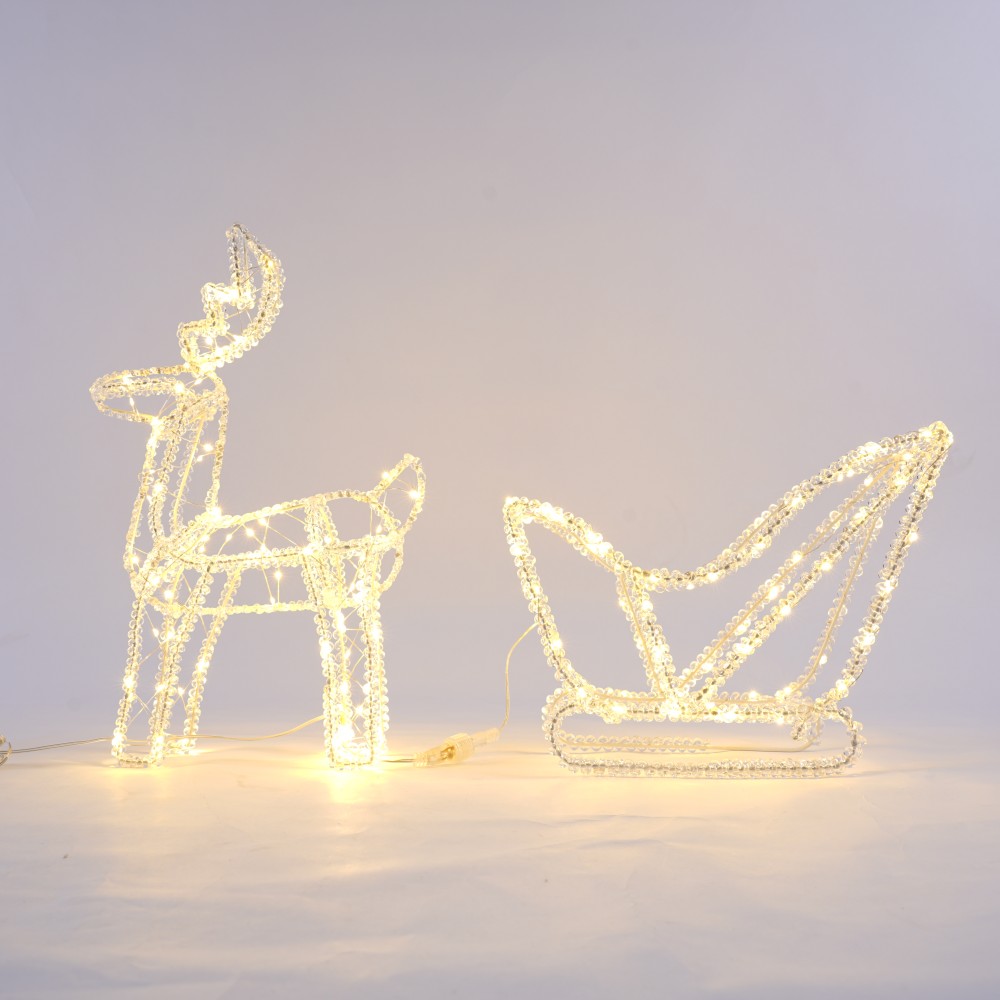
Common Electrical Reasons Behind LED Christmas Light Flickering
Power conversion instability
LED chips require controlled direct current (DC) rather than the alternating current (AC) supplied from household outlets. A small driver or rectifier inside the lighting system converts electricity into a suitable form.
During this conversion process, unstable components may create voltage fluctuations. The LED chips respond quickly to these changes because they have very little thermal delay compared with traditional bulbs.
- Low-quality rectifier circuits may produce visible brightness changes
- Insufficient filtering capacitors can allow voltage ripple to reach LED modules
- Driver aging may reduce current stability after repeated operation
Technical discussions about LED holiday lighting indicate that flicker often comes from power supply design rather than the LED semiconductor itself. Rectification methods and current regulation quality have a direct impact on light stability.
Heat Buildup Inside Compact Lighting Components
Why temperature affects light performance
Although LED lights generate less heat than traditional incandescent products, electronic components inside the power module still produce thermal energy. Small indoor decoration lights usually have limited space for heat dissipation.
After several hours of continuous operation, rising temperature may influence:
- Driver efficiency
- Capacitor performance
- Solder connection reliability
- Current regulation accuracy
A lighting string that works normally at room temperature may start showing flicker after internal temperatures increase.
Thermal stress comparison
| Component | Function | Possible Heat Effect |
| LED chip | Produces visible light | Brightness reduction at elevated temperature |
| Driver circuit | Controls voltage and current | Output fluctuation after overheating |
| Capacitor | Filters electrical ripple | Reduced smoothing ability |
| Solder joints | Connect electronic parts | Expansion and contraction fatigue |
Connection Problems Hidden Inside Light Strings
Loose contact points
Decorative lights often contain dozens or hundreds of small LED nodes. Each connection point must maintain stable electrical contact during daily use.
Minor manufacturing variation, repeated bending, or pulling during installation may weaken these areas. The result can appear as occasional flashing rather than complete failure.
- Connector resistance increases and interrupts stable current flow
- Wire movement creates temporary contact changes
- Poor insulation sealing allows oxidation around contacts
Voltage Compatibility and Overloaded Connections
Matching the power source with the light system
Many indoor decorative lights use USB power, low-voltage adapters, or specialized controllers. A mismatch between the light string and power source may create unstable operation.
| Power Issue | Effect on LED Lights |
| Adapter output lower than required | Brightness drops or repeated flickering appears |
| Voltage fluctuation | LED current becomes unstable |
| Overloaded extension socket | Power interruptions may occur |
| Incorrect controller connection | Lighting modes behave abnormally |
LED systems are sensitive to power quality because their drivers depend on precise voltage management. Similar issues have been reported across different LED lighting products, where inadequate power supply capacity creates repeated flashing behavior.
Why Some Flickering Appears Only After Several Days
Component aging process
A lighting system does not always fail immediately after a component begins degrading. Small changes accumulate through repeated heating and cooling cycles.
- Capacitors gradually lose electrical efficiency
- Metal contacts develop higher resistance
- Plastic housings expand and contract under temperature changes
This explains why a decoration light may appear reliable during the first installation but develop flickering behavior later.
Different Types of Flicker Users May Notice
Visible flashing
This type appears as obvious on-and-off changes that can be seen directly. It usually indicates unstable current delivery or poor filtering.
Subtle brightness fluctuation
Some lights do not turn off completely but continuously change intensity. Cameras may capture this effect more clearly than human eyes.
The Department of Energy explains that flicker refers to changes in light output over time, with different effects depending on frequency and intensity.
Practical Checks Before Replacing Indoor LED Christmas Lights
- Test another power outlet to exclude unstable household power connections
- Check the adapter rating to confirm voltage and current compatibility
- Inspect connectors for loose sections or visible damage
- Avoid covering power modules because trapped heat accelerates component stress
Flickering after short-term use does not always mean the LED chips are defective. The real cause often comes from hidden factors such as unstable drivers, heat buildup, connection resistance, or unsuitable power conditions.
Indoor Decoration LED Christmas Lights combine delicate electronic components with decorative flexibility, which makes internal design quality especially important. A stable lighting experience depends on balanced electrical control, reliable connections, and proper operating conditions.
Recognizing these technical details allows users to better understand why a light string changes from steady illumination to unexpected flickering and what factors influence long-term decorative performance.

Don't Miss New Releases & Subscriber Exclusives
Sign up for our newsletter to stay in the holidy spirit all year.
Further Questions? Contact Us
-
Useful Links
Home Products About Us Production Services News Contact Us -
Classification
Mini String Light LED Light Set Garland Light Light-up Spiral Trees LED Curtain Lights Battery Light LED Copper Wire Light Decorative Light -
Contact Info
zd@zflgf.com.cn+86-576-82467401
+86-13968612122 ( Ms. Zhang )
+86-13505747679 ( Mr. Tan )
+86-15062835074 ( Mr. Cheng )No.270 Zhenxi Road, Xinqiao Town, Luqiao District, Taizhou City, Zhejiang Province, China -


Holiday Lights Supplier